This guide explains what happens to your electricity supply after dark, how a home battery stores and releases solar power overnight, realistic runtime for different battery sizes and usage patterns, and how to size a system that actually covers your household through the night.
Table of Contents
- 1.When Your Solar Panels Switch Off, Where Does Your Power Come From?
- 2.From Sunset to Sunrise: How Your Battery Takes Over
- 3.How Many Hours Can a Solar Battery Really Cover After Dark?
- 4.Why Your Stored Solar Is Most Valuable in the Evening
- 5.What Happens If Your Battery Runs Flat at 3am?
- 6.Battery Backup During Blackouts at Night
- 7.Choosing the Right Battery Size for Your Household
- 8.Conclusion
Your solar panels do all their work between sunrise and sunset. The moment the sun drops, generation stops completely but that's usually when your home is using the most power. Dinner's cooking, the TV's on, lights are on in every room, and the day's washing is in the dryer. Without a battery, every bit of that evening and overnight electricity comes straight from the grid, at the exact time it costs the most.
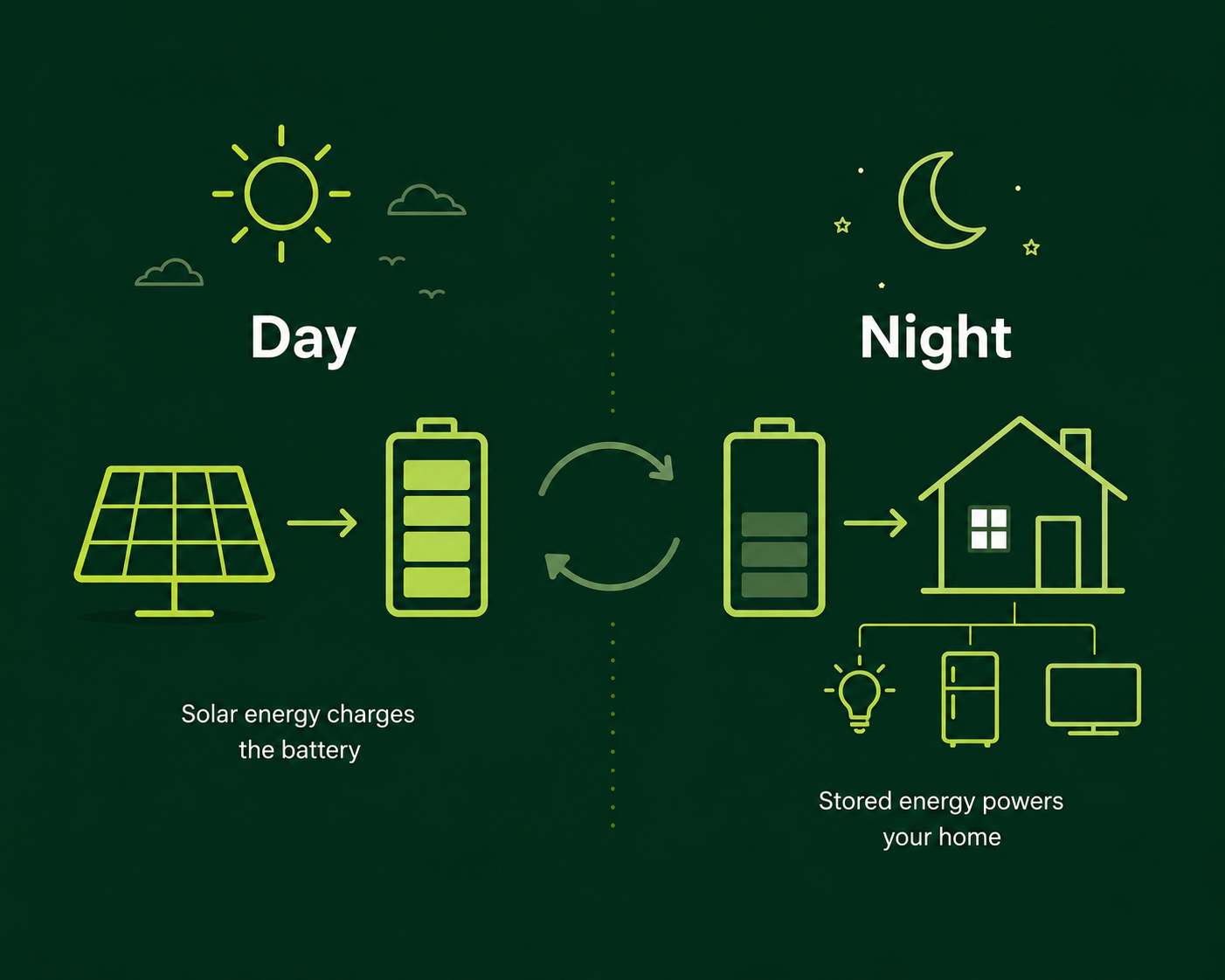
A home battery changes that. It stores the solar power your panels generated during the day but your household didn't use, then releases it after dark turning free daytime sunshine into free nighttime electricity.
When Your Solar Panels Switch Off, Where Does Your Power Come From?
Without a battery, any solar power you don't use during the day gets exported to the grid for a feed-in credit, usually a fraction of what you'd pay to buy that same electricity back later. Come evening, your home switches straight to buying grid power again, at full retail rate.
A home battery captures that exported daytime power before it leaves your property. Instead of sending it to the grid for a small credit, it's stored on-site and ready the moment your panels stop producing.
From Sunset to Sunrise: How Your Battery Takes Over
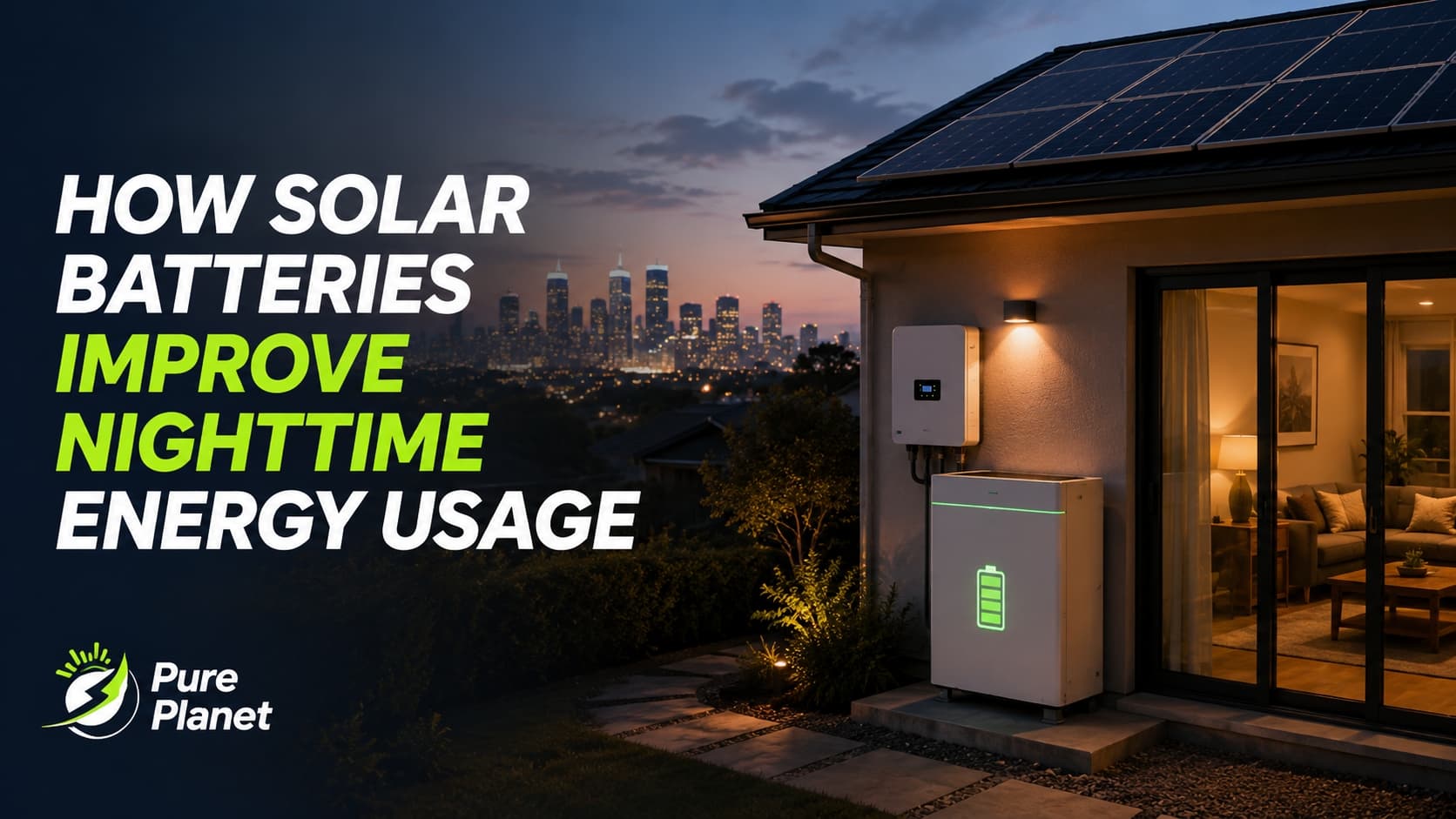
Once the sun sets, your battery takes over automatically; there's no manual switching involved. A hybrid inverter manages the handover, drawing from the battery first and only pulling from the grid once the battery is empty.
Through the evening and overnight, your battery typically covers:
Lighting, TV, and general appliance use
Fridge and freezer running continuously
Overnight phone, laptop, and device charging
Dishwasher, washing machine, or dryer cycles run after dark
Standby power for everything left plugged in
If you've read our guide on how solar panels reduce peak electricity consumption, you'll know the evening period is also when electricity is priced highest on most Victorian plans. A battery doesn't just keep the lights on overnight — it specifically avoids the most expensive hours to buy power.
How Many Hours Can a Solar Battery Really Cover After Dark?
This is the question most homeowners actually want answered, and the honest answer is: it depends on what you're running. Battery runtime comes down to a simple formula battery size in kWh, divided by how much power your home draws per hour.
Most Victorian households use between 15–25kWh of electricity a day, with a large share of that falling in the evening and overnight window. For an average family, a 10–14kWh battery is generally enough to cover typical evening and overnight use after solar production stops running air conditioning or ducted heating all night is what shortens that window the most.
Why Your Stored Solar Is Most Valuable in the Evening
Every kilowatt-hour your battery supplies at night is a kilowatt-hour you're not buying from the grid during the most expensive part of the day. On a typical Victorian time-of-use plan, evening electricity can cost two to three times more than the same power purchased at midday which means the value of stored solar power is highest exactly when you need it most.
Over a year, this is usually where battery owners see the biggest jump in savings compared to solar panels alone, not from generating more power, but from avoiding the grid's most expensive hours entirely.
What Happens If Your Battery Runs Flat at 3am?
If your battery discharges fully before your panels start generating again the next morning, your home switches back to the grid automatically. There's no interruption, no manual intervention, and nothing to reset. Your inverter handles the transition seamlessly, and your panels simply top the battery back up the next time the sun's out.
This is a normal part of day-to-day operation, especially in winter when there's less solar production to recharge the battery, or after a high-usage evening. It doesn't mean the system is undersized, it just means that particular night's usage exceeded what was stored.
Battery Backup During Blackouts at Night
A standard grid-connected solar system shuts down during a blackout, for the safety of crews working on the network even if the sun is shining. A battery with backup capability is different: it can keep essential circuits running through an outage, day or night, because it isn't relying on the grid to operate.
This is especially useful overnight, when a blackout with no backup means no lights, no fridge, and no way to charge a phone until power is restored. Homes already running this setup, like the Frankston home battery and virtual power plant project, show how a properly configured battery keeps a household running through outages that would otherwise leave it in the dark.
💡 Pro Tip
Run high-energy appliances like your dishwasher, washing machine, and heat-pump hot water system during the day so your battery has more stored solar power left for the expensive evening hours.
Choosing the Right Battery Size for Your Household
The right size depends on your evening and overnight usage, not just your total daily consumption. A few things worth considering:
Check your evening habits. Households that cook, run appliances, and use air conditioning or heating in the evening need more capacity than those with lighter evening use.
Account for your solar system size. A larger solar array recharges a battery faster the next day, so undersizing is less risky than it would be with a smaller system.
Think about blackout protection separately. If backup power matters to you, this affects which battery model and configuration you need, not just the size.
Consider a heat pump alongside your battery. If your hot water is still gas or an older electric system, a heat pump hot water system can run during the day on solar, freeing up more of your battery's overnight capacity for everything else see our guide on how solar batteries work with heat pumps at night for that specific setup.
A free energy assessment is the most reliable way to size this properly, guessing based on daily totals alone tends to either oversize (paying for capacity you don't use) or undersize (running out most nights).
Conclusion
Solar panels solve the daytime half of your electricity bill. What happens after dark is a separate problem entirely and it's the one most homeowners underestimate until they see how much of their bill is actually racked up in the evening. A correctly sized battery closes that gap, turning the sunshine your panels captured hours earlier into the power that runs your home overnight, at a fraction of the cost of buying it back from the grid.
The right size comes down to your household's actual evening habits, not a generic number which is exactly what a proper assessment is for.
Want to know what battery size actually covers your household overnight? Check your eligibility with our free calculator, get a personalized quote, or get in touch with our Melbourne-based team for a straight answer on what fits your home.