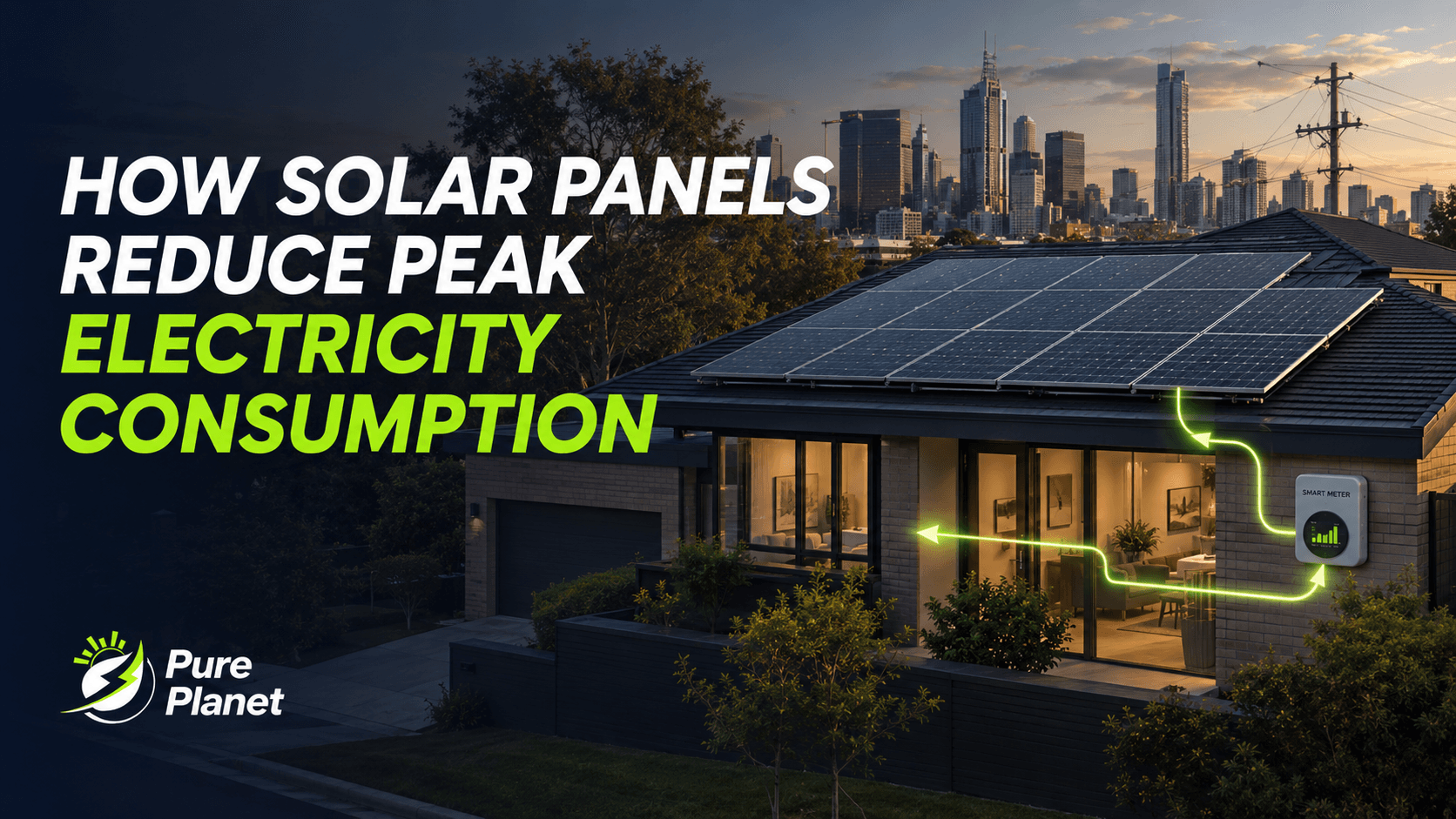
This guide explains what "peak electricity consumption" actually means on a Victorian power bill, how solar panels reduce it, why the evening peak is still a problem for solar-only households, and what role a home battery and heat pump hot water system play in solving it with a practical breakdown of Victoria's 2026 tariff changes.
Table of Contents
- 1.What Is Peak Electricity Usage in Victoria?
- 2.How Solar Panels Cut Peak Demand at the Source
- 3.The Evening Peak Problem (and Why Solar Alone Isn't Enough)
- 4.How a Battery Helps Reduce Peak Electricity
- 5.Practical Ways to Shift Your Own Peak Usage
- 6.Can Solar Eliminate Peak Electricity Completely?
- 7.How the New Tariffs Change Your Savings
Your electricity retailer doesn't charge you the same price for every unit of power you use. If you're on a time-of-use plan, the power you draw between 4pm and 9pm can cost two to three times more than the same amount used at midday. That single fact is why "peak electricity consumption" matters more to your bill than your total usage does and it's exactly where solar panels do their best work.
If you've read our piece on how solar panels reduce household electricity bills, you already know solar cuts your overall spend. This guide goes one level deeper: it's about when your home draws power, not just how much, and why that timing is the real key to a smaller bill.
What Is Peak Electricity Usage in Victoria?
"Peak" usually means one of two things on your bill:
- Time-of-use peak pricing — higher per-kWh rates during set hours, typically weekday afternoons and evenings.
- Demand charges — a separate fee based on the single highest burst of power your home or business draws from the grid, often measured in a 15 or 30-minute window.
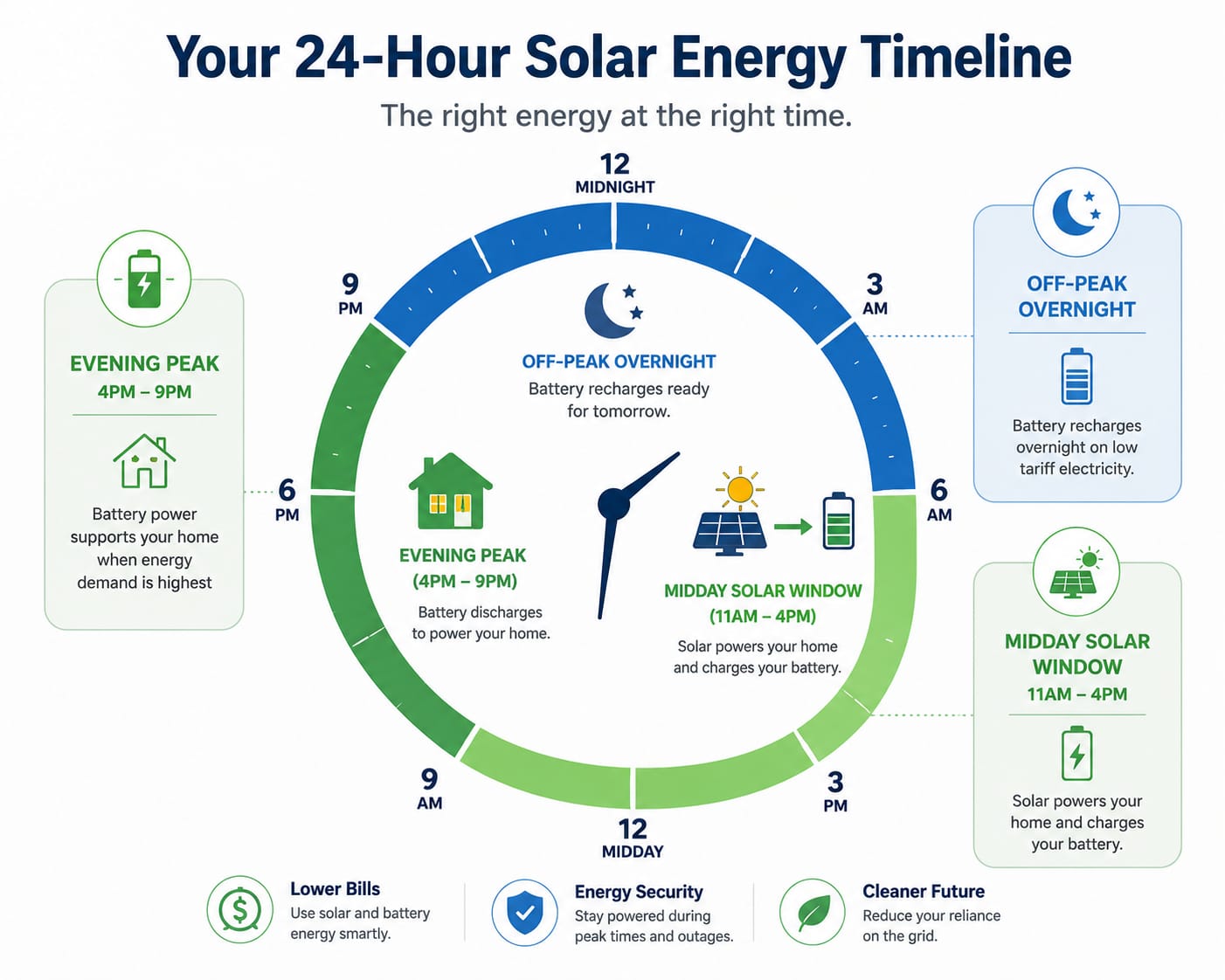
Victoria's tariff structure is changing this year. From 1 July 2026, residential demand tariffs are being phased out, and many retailers are shifting customers to a new three-part "Smart Rate" time-of-use structure: cheaper rates from 11am–4pm, a shorter evening peak window of 4pm–9pm, and standard off-peak pricing overnight. A separate Midday Power Saver offers free power from 11am–2pm every day, including weekends, and becomes available from 1 October 2026.
In other words: the cost gap between midday and evening power in Victoria is about to get wider, not narrower. That makes timing your usage more valuable than ever.
How Solar Panels Cut Peak Demand at the Source
Rooftop solar generates most of its output in the middle of the day right when Victoria's new cheaper midday window sits, and right when many businesses and larger households are drawing the most power from the grid. A well-sized solar panel system offsets that draw directly: instead of buying midday grid power, your home runs on power it generated on its own roof.
This is why solar-only households already see:
- Lower daytime grid consumption, often the largest slice of a typical bill
- Reduced strain on the local network during Victoria's hottest, highest-demand afternoons
- A smaller "peak demand" reading if your plan still includes a demand charge component
For many Melbourne homes, this alone accounts for the bulk of the 70–90% bill reduction solar customers typically report.
The Evening Peak Problem (and Why Solar Alone Isn't Enough)
Here's the catch: competitors rarely spell out clearly: solar panels stop producing power as the sun goes down right as Victoria's evening peak window (4pm–9pm) begins. This is exactly when most households are home, cooking dinner, running the dryer, and switching on heating or air conditioning.
Without storage, that gap gets filled with expensive grid electricity, at the exact rate solar was supposed to help you avoid. This is the single biggest reason a solar-only system won't fully solve peak electricity consumption on its own and it's the honest answer most generic solar guides skip.
How a Battery Helps Reduce Peak Electricity
A home battery stores the solar power your panels generate but your household doesn't use straight away typically the excess exported at midday and releases it during the 4pm–9pm peak window instead. That shifts your evening consumption from the grid's most expensive rate to power you already own.The table below shows how each setup handles Victoria's peak windows:
Adding a heat pump hot water system extends the same logic to your hot water load, which is one of the biggest single draws in an Australian home. Because a heat pump can run efficiently on a timer during the day, it soaks up midday solar to heat your water effectively acting as a second, "free" battery and leaving more stored battery capacity for the evening peak. It's the same reason we treat solar, battery, and heat pump as one connected upgrade rather than three separate purchases.
Homes already running this combination, like the Frankston battery and virtual power plant project, show how much further a coordinated system goes than solar panels alone.
Practical Ways to Shift Your Own Peak Usage
You don't need new equipment to start cutting peak consumption today. A few habit changes make a real difference:
- Run the dishwasher, washing machine, and dryer between 11am and 4pm, when solar output and Victoria's new Smart Rate pricing both work in your favour.
- Charge an EV during daylight hours where possible, rather than overnight or during the evening peak.
- Set your heat pump hot water system to heat during the day, not on an evening timer.
- Pre-cool or pre-heat your home before 4pm in summer and winter, so heating/cooling systems aren't fighting the evening peak.
- Check your plan against the Midday Power Saver offer launching 1 October 2026 if your usage is heavily daytime-based.
Can Solar Eliminate Peak Electricity Completely?
Solar panels can significantly reduce peak electricity use, but they don't eliminate it completely for every household. The final result depends on your energy habits, battery size, and the amount of electricity you use after sunset. Homes with a well-sized battery can cover most evening demand, while larger households may still import some electricity from the grid during extended periods of high usage. The goal isn't to eliminate grid electricity entirely it's to reduce the amount you buy when electricity is at its most expensive.
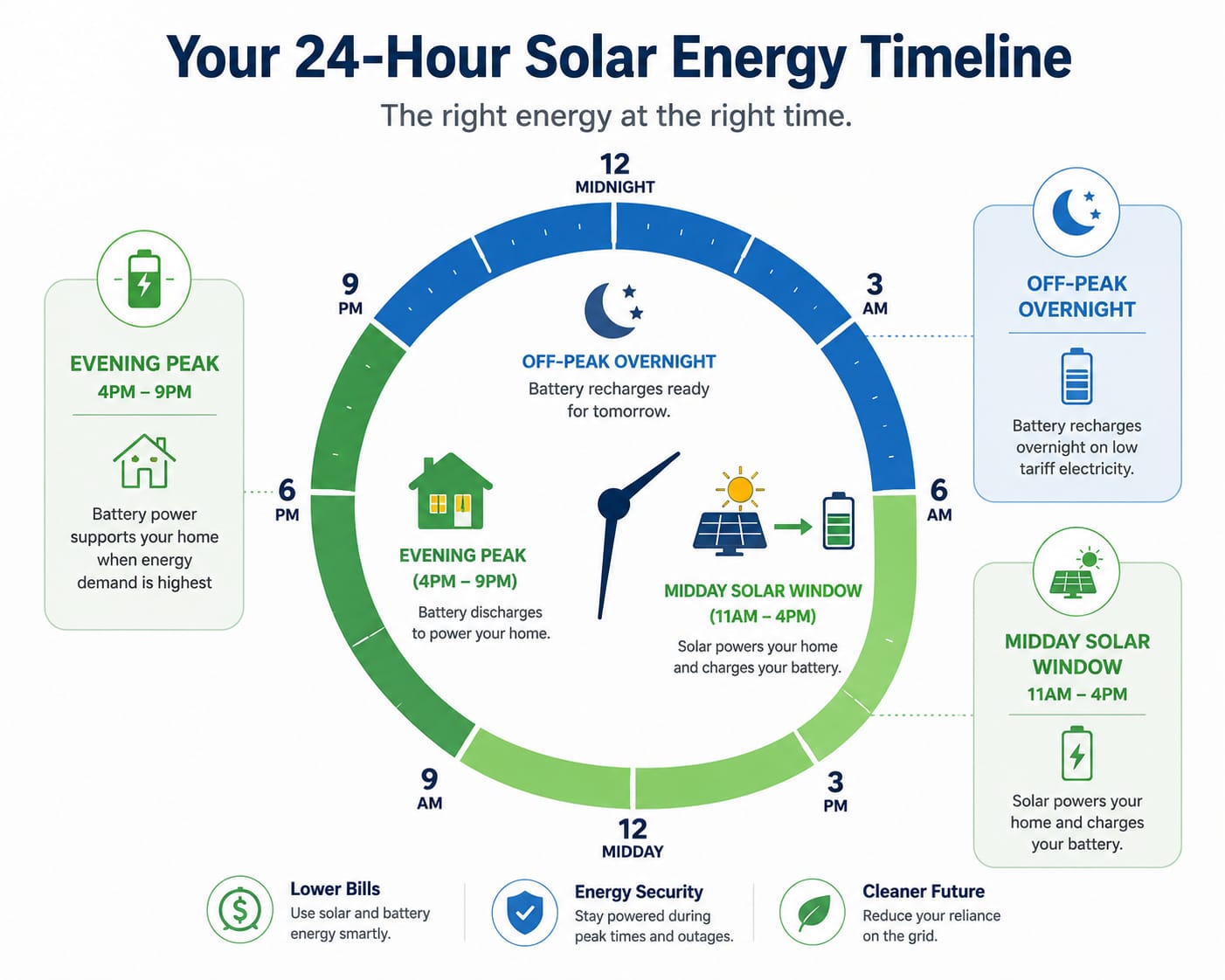
How the New Tariffs Change Your Savings
With residential demand tariffs disappearing from 1 July 2026 and the new Smart Rate structure rewarding midday use, the households that benefit most will be the ones already set up to consume power when it's cheapest, which is exactly what a solar and battery system is designed to do. If your system was sized only around your total annual usage rather than when you use it, it's worth checking your setup against the new tariff windows.
You can get a feel for your own numbers using our rebate and savings calculator, or speak with our team about whether your current system needs a battery or heat pump to make the most of the new peak windows.
Conclusion
Every Victorian household is about to feel the cost of "when" more than the cost of "how much." As demand tariffs disappear and the Smart Rate structure widens the gap between cheap midday power and expensive evening power, the homes that come out ahead won't necessarily be the ones using the least electricity, they'll be the ones using it at the right time. Solar panels already do this instinctively, soaking up the cheapest hours of the day before the evening peak even begins. A battery takes that same logic and stretches it into the night, and a heat pump quietly moves one of your biggest loads out of the expensive window altogether.
None of this requires you to overhaul how you live. It requires a system sized for when you'll actually draw power, not just how much you use over a year and that's the piece most quotes skip.
Want to know what a peak-smart setup looks like on your own roof? Check your eligibility with our free calculator or get a personalised quote from our Melbourne-based team no call centre, no pressure, just a straight answer on what fits your roof, your usage, and Victoria's new tariff windows.