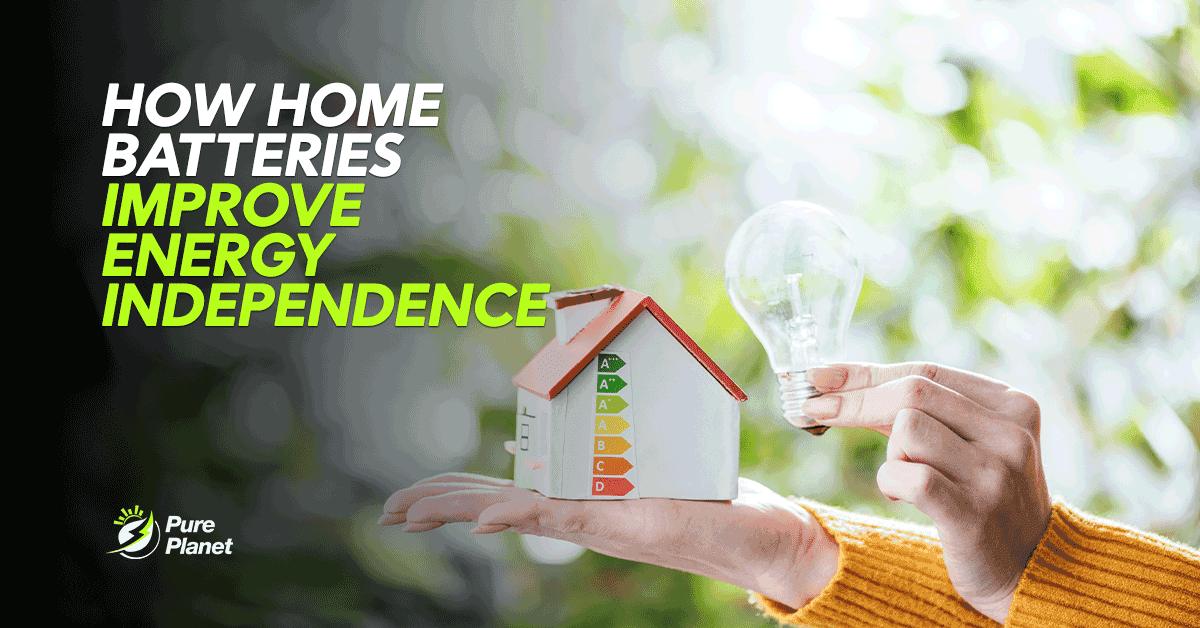
Discover how home batteries improve energy independence. Learn how solar battery storage reduces grid reliance, lowers bills, and secures your home's power.
Table of Contents
- 1.Understanding Solar Energy and the Role of Storage
- 2.How Storage Works with the Grid
- 3.Cost Savings and Electricity Bill Reduction
- 4.Factors Affecting Solar Efficiency and Battery Performance
- 5.Round-Trip Efficiency
- 6.Depth of Discharge (DoD)
- 7.Government Rebates and Incentives in Australia
- 8.Residential vs Commercial Solar Battery Use
- 9.Residential Independence
- 10.Commercial Independence
- 11.Practical Tips for Choosing Solar Battery Systems
- 12.Frequently Asked Questions
- 13.How much can solar panels save in Australia?
- 14.Are solar panels worth it in Australia?
- 15.What rebates are available for solar systems?
- 16.How long do home batteries last?
- 17.Can a battery make me completely off-grid?
- 18.Conclusion
Home batteries improve energy independence by allowing you to store the excess electricity generated by your solar panels for use during the night or during a power outage. Instead of sending your surplus energy back to the grid for a minimal credit, you keep it within your own home. This significantly reduces your reliance on external energy providers and protects you from rising utility prices by maximizing your self-consumption of clean, renewable energy.
In Australian households, solar systems typically generate an abundance of power during the day when the sun is strongest, but energy consumption often peaks in the evening. By integrating solar battery storage, you bridge this gap. A properly installed solar system equipped with a battery ensures that your home runs on your own stored sunshine long after sunset, effectively giving you control over your own power supply.
Understanding Solar Energy and the Role of Storage
Solar energy is a renewable resource captured by solar panels Australia wide. These panels convert sunlight into direct current (DC) electricity. To make this power usable for your home, inverter systems convert the DC electricity into alternating current (AC).
While solar panels are excellent at producing power, they cannot provide electricity when the sun isn't shining unless you have a way to save it. This is where home batteries improve energy independence. The battery captures the daytime overflow, preventing it from escaping to the grid, and holds it ready for when your family actually needs it.
How Storage Works with the Grid
Most solar-equipped homes maintain a grid connection. This acts as a safety net. However, without a battery, you are forced to buy back electricity at a much higher rate than the "feed-in tariff" you receive for selling it. Storing your own power is the most effective way to decouple your household budget from the fluctuating costs of the Australian energy market.
Cost Savings and Electricity Bill Reduction
The financial benefit of storage is clear. Most homeowners notice reduced electricity bills when they stop "buying back" their own energy. By utilizing stored power during peak evening periods, when electricity rates are at their highest, you maximize the value of every kilowatt-hour your roof produces.
Lower Daily Supply Charges: While you stay connected to the grid, your actual consumption from it drops toward zero.
Avoided Peak Pricing: You use your battery when the grid is most expensive.
Higher ROI: Although the upfront cost is an investment, the long-term solar energy savings grow as utility prices continue to climb.
To get a clearer picture of how these components fit your specific budget, you can view our solar services for a tailored breakdown of potential savings.
Factors Affecting Solar Efficiency and Battery Performance
Not all batteries perform the same way in the Australian climate. Several technical factors will influence how effectively your home batteries improve energy independence.
Round-Trip Efficiency
This refers to the amount of energy you can get back out of the battery compared to what you put in. High-quality lithium-ion batteries used in renewable energy Australia projects typically have a round-trip efficiency of over 90%, meaning very little power is lost during storage.
Depth of Discharge (DoD)
The DoD indicates how much of the battery's capacity you can safely use without damaging its lifespan. Modern batteries allow you to use almost 95% to 100% of their stored power, providing more usable energy for your home compared to older lead-acid technology. To ensure you are choosing a system with high durability, you can learn more about our team and our selection of premium hardware.
Government Rebates and Incentives in Australia
The transition to a self-sufficient home is supported by various solar rebates and incentives. While the federal "solar rebate" (STCs) primarily covers the panels, several Australian states offer specific programs for storage.
In 2026, many state governments have introduced interest-free loans or direct rebates for battery installations to help stabilize the national grid. By participating in these programs, you lower the initial cost of your system, allowing the home batteries improve energy independence benefit to begin paying for itself much sooner.
Residential vs Commercial Solar Battery Use
The scale of energy independence differs between a family home and a local business, but the core technology remains the same.
Residential Independence
For a home, the focus is on achieving a "net-zero" daily cycle. This means the panels charge the battery during the day so the family can cook, watch TV, and run heating or cooling at night without drawing from the grid.
Commercial Independence
Businesses use batteries to manage "demand charges." By using stored energy during periods of high activity, a business can prevent a massive spike in their grid draw, which energy retailers often penalize with high fees. For commercial entities, batteries are as much about risk management as they are about energy savings.
Practical Tips for Choosing Solar Battery Systems
Selecting the right storage unit is essential to ensure your home batteries improve energy independence effectively for years to come.
Sizing is Key: A battery that is too small won't last the night, while one that is too large will never be fully charged by your panels. Your battery should be sized relative to your average overnight energy consumption.
Blackout Protection: Ensure your inverter supports "island mode" or "backup" functionality. Some batteries only save you money but won't work during a blackout unless specifically configured to do so.
Future-Proofing: If you are buying panels now but plan to add a battery later, ensure you install a "hybrid inverter" today. This prevents the need for an expensive inverter replacement in the future.
Choosing the right partner for this installation is just as important as the hardware. You can consult with our installers to determine which battery chemistry and capacity best suit your property's orientation and energy needs.
Frequently Asked Questions
How much can solar panels save in Australia?
A standard solar system without a battery saves the average household between $1,200 and $1,500 annually. Adding a battery can increase these savings significantly by covering the expensive evening peak periods, often bringing the total annual savings over $2,000.
Are solar panels worth it in Australia?
Yes. Australia has the highest solar radiation per square meter of any continent. With the current rebates and the high cost of grid electricity, solar remains one of the most effective ways to increase property value and decrease monthly expenses.
What rebates are available for solar systems?
The federal STC scheme provides an upfront discount on panels. State-based incentives vary, with many offering interest-free loans or rebates specifically for solar battery storage to help households achieve energy independence.
How long do home batteries last?
Most modern lithium solar batteries come with a 10-year warranty. Depending on usage and environmental conditions, they generally provide reliable service for 12 to 15 years.
Can a battery make me completely off-grid?
While home batteries improve energy independence, going completely off-grid requires a very large battery and panel array to account for consecutive rainy days. Most Australians choose to stay "hybrid", connected to the grid for emergencies while relying on their battery for 90% of their needs.
Conclusion
True energy independence is about more than just generating power; it is about having the freedom to use that power whenever you need it. As utility costs continue to rise across Australia, the ability to store your own clean energy becomes a vital tool for household financial security. By integrating storage into your renewable energy strategy, you ensure that your investment works for you 24 hours a day.
Understanding how solar energy works and the savings it offers can help you make a more informed decision when considering a solar system for your property.