
Melbourne winters are cold enough to make hot water expensive but not cold enough to slow down a modern heat pump. CO₂ heat pumps from brands like Reclaim Energy and Sanden are built to operate efficiently well below zero, and Melbourne's typical June–August temperatures land right in their performance sweet spot. This article looks at real winter COP figures, brand-by-brand performance differences, and how to schedule your system to get the most out of it during the coldest months of the year.
Table of Contents
- 1.Melbourne's Winter Temperature Profile and Why It Matters
- 2.What COP Actually Means for Your Bill in Winter
- 3.How COP Changes as the Temperature Drops
- 4.Brand Performance in Melbourne's Winter Conditions
- 5.Why Winter Is When Your Hot Water Bill Hurts Most
- 6.Is a Heat Pump Still Worth It in Melbourne Winter?
- 7.Running Your Heat Pump Smarter in Winter
- 8.Solar and Heat Pumps in Winter Making the Combination Work
- 9.Practical Tips for Winter Heat Pump Performance
- 10.Conclusion
Melbourne's Winter Temperature Profile and Why It Matters
Melbourne's reputation for unpredictable weather doesn't apply to winter in the way most people assume. The coldest months — June, July, and August — follow a fairly consistent pattern:
Overnight lows: 5°C to 9°C on most nights; occasional frosts dip to -1°C to -3°C in outer suburbs
Morning temperatures (6am–10am): 5°C to 11°C — the coldest part of the operating day
Afternoon temperatures (12pm–3pm): 11°C to 15°C — the warmest window of a winter day
Average daily temperature: approximately 9°C–13°C across the season
These figures matter because CO₂ heat pump efficiency is directly tied to ambient air temperature. The colder the air, the harder the system works to extract heat but "harder" doesn't mean "failing." Modern CO₂ systems are rated to operate at -10°C, which means Melbourne's winters are well within the system's comfort zone.
In fact, compared to genuinely cold climates like Canberra (which regularly sees -5°C to -8°C overnight lows) or alpine regions, Melbourne is a relatively mild operating environment. A heat pump installed here isn't fighting the cold, it's working well within its design parameters throughout the entire winter.
What COP Actually Means for Your Bill in Winter
COP stands for Coefficient of Performance. It's the most important performance metric for a heat pump and one of the most commonly misunderstood.
A COP of 4.0 means the system produces 4kW of heat for every 1kW of electricity it consumes. Compared to a standard electric resistance heater (COP 1.0 100% of electricity becomes heat and nothing more) or gas (effective COP of around 0.85 after combustion losses), a heat pump at COP 4.0 is roughly four to five times more efficient than the alternatives.
In dollar terms: if your electric tariff is 30 cents per kWh, a COP 4.0 heat pump produces hot water at an effective cost of 7.5 cents per kWh of heat. A gas system paying 3.5 cents per MJ might seem cheaper until you account for the conversion 1kWh = 3.6MJ, so gas costs roughly 12.6 cents per kWh equivalent. The heat pump wins, even on grid power alone. With solar factored in, the comparison isn't close.
How COP Changes as the Temperature Drops
COP is not a fixed number it changes with the outdoor temperature. This is the honest performance picture that most product brochures gloss over.
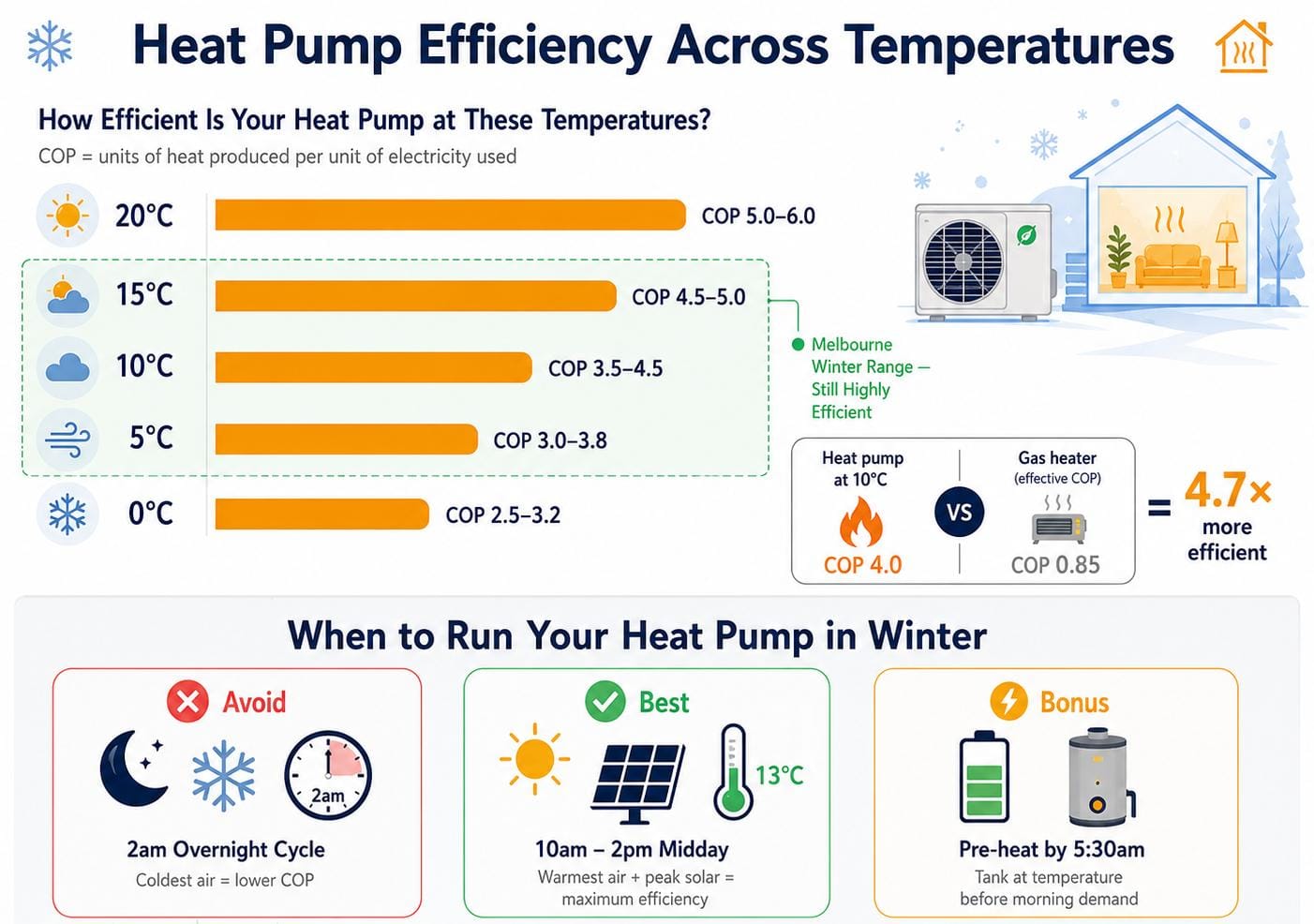
The key takeaway: even on Melbourne's coldest mornings, a quality CO₂ heat pump operates at a COP well above 2.5 — which still substantially outperforms gas heating. On a typical Melbourne winter afternoon at 12°C, you're still looking at a COP of 3.8 to 4.2, meaning you're getting nearly four units of heat for every unit of electricity used.
Brand Performance in Melbourne's Winter Conditions
Not all heat pumps handle Melbourne's winter equally. Here's how the brands Pure Planet installs compare on the metrics that matter most for cold-season performance:
Reclaim Energy is Pure Planet's top pick for Melbourne homes. Its CO₂ refrigerant system is specifically engineered for cold-air extraction and its Wi-Fi solar inverter integration means it automatically runs when your panels are producing capturing free solar energy as hot water, even in winter.
Sanden Eco Plus is a Japanese-made CO₂ system with equally strong cold-weather credentials. Its split-system design (separate tank and heat pump unit) gives more installation flexibility, particularly in homes where space near the hot water tank is limited.
Stiebel Eltron uses a different refrigerant (R134a) and operates efficiently above -5°C — comfortably within Melbourne's range. Its exceptionally quiet operation makes it ideal for homes where the unit sits near a bedroom window or a neighbour's fence line.
For more detail on each brand, see our heat pump installation service page.
Why Winter Is When Your Hot Water Bill Hurts Most
Three things happen simultaneously in winter that drive hot water costs up:
1. You use more hot water. Showers run longer in cold weather. Baths become more frequent. Dish water needs to be hotter to cut through grease. A household that uses 150 litres of hot water per day in summer might use 180–200 litres in winter without even noticing.
2. Incoming cold water is colder. In summer, the water entering your tank from the mains might be 18–20°C. In winter, it drops to 10–12°C. This means the system has to work harder to raise the water temperature to your 60°C setpoint — it's heating through a larger gap.
3. Heat loss from the tank increases. An uninsulated or older tank sitting in a cold garage or outside in winter loses more heat overnight. The system has to reheat the water more frequently.
Gas systems suffer all three of these effects and pass the cost directly onto your bill. A heat pump handles the increased demand with the same underlying efficiency and because it draws from the air rather than burning fuel, your per-litre cost of hot water stays stable regardless of how cold the inlet water is.
Is a Heat Pump Still Worth It in Melbourne Winter?
Many homeowners worry that a heat pump will struggle during Melbourne's colder months, but modern systems are specifically designed to operate efficiently in winter conditions. While efficiency naturally decreases as outdoor temperatures fall, Melbourne's climate remains well within the optimal operating range for quality CO₂ heat pumps. Even on frosty mornings, they continue to produce several units of heat for every unit of electricity consumed, making them significantly more efficient than traditional electric or gas water heaters.
For households with rooftop solar, scheduling the heat pump to run during the middle of the day can further reduce running costs by using free solar energy. Combined with available government incentives and lower ongoing energy bills, a heat pump remains one of the most cost-effective hot water solutions for Melbourne homes throughout the year.
Running Your Heat Pump Smarter in Winter
Scheduling is where a large portion of your winter savings come from and most households never adjust their default settings.
Run during the warmest window, not overnight. Many heat pumps default to a 2am heating cycle — a legacy setting from off-peak electricity tariffs. In winter, 2am might be 5°C or colder. Shifting the cycle to 11am–2pm, when temperatures have climbed to 12–15°C, can improve your COP by 0.5 to 1.0 — a meaningful efficiency gain over the course of a full winter.
Pre-heat before the coldest window. If your household takes showers between 6am and 8am, set the heat pump to complete its cycle by 5:30am. Don't let it try to heat from cold during the actual morning chill have the tank already at temperature.
Raise your tank setpoint slightly in winter. If your system is set to 55°C, consider moving it to 60°C during June–August. A hotter tank loses less relative heat overnight and provides more thermal buffer before the system needs to reheat.
Don't turn it off during cold snaps. Some homeowners switch their heat pump off on the coldest days, worried it won't cope. Modern CO₂ systems are specifically designed for these conditions turning it off and falling back to grid electricity or gas defeats the purpose of the installation.
Solar and Heat Pumps in Winter Making the Combination Work
Melbourne gets approximately 3.5 to 4 peak sun hours per day in winter, compared to 5+ in summer. Solar panels still produce power just less of it, and for a shorter window during the middle of the day.
This makes timing even more critical in winter. The ideal strategy:
Set your heat pump to run between 10am and 2pm, this captures both the warmest ambient air temperature AND the peak of your solar production window
If your battery is nearly full by midday, direct solar power goes to the heat pump before exporting to the grid
Reclaim Energy's Wi-Fi solar integration does this automatically the system reads your inverter's production data and delays or advances the heat cycle to maximise solar use
A 6.6kW solar system on a clear Melbourne winter day will produce approximately 20–25kWh of energy. A heat pump heating 200 litres of water from 12°C to 60°C uses roughly 3–4kWh. Running the heat pump during peak solar hours means this entire daily hot water requirement is covered by your panels with plenty of solar remaining for the rest of the house.
For more on running appliances during solar hours, see our guide on how solar batteries work with heat pumps at night, which covers the evening complement to this daytime strategy.
💡 Pro Tip
In Melbourne's coldest weeks (usually mid-July), switch your heat pump's heating schedule from early morning to late morning specifically 10:30am to 1:30pm. Ambient air temperature at that window is typically 3–5°C warmer than at 6am, which meaningfully improves COP and reduces your electricity draw. If you also have a solar system, this window aligns with peak panel production. Many homeowners who make this single scheduling change report a noticeable improvement on their next quarterly bill without changing anything else about their setup.
Practical Tips for Winter Heat Pump Performance
These steps apply regardless of which heat pump brand you have installed:
Check the area around the unit. Heat pumps draw air through their intake. In winter, leaves, mulch, or garden debris can accumulate around the unit and restrict airflow. A clear 500mm clearance on all sides keeps efficiency at its rated level.
Don't let frost sit on the unit for extended periods. Modern systems run their own defrost cycles automatically, but if you notice persistent ice on the coils that isn't clearing, contact your installer. This can indicate a refrigerant issue that reduces winter performance.
Insulate older hot water pipes. If your pipes run through an uninsulated roof space or garage, heat loss between the tank and your taps can waste 10–15% of the hot water you've already paid to heat. Pipe lagging is a cheap fix with a real return.
Review your hot water setpoint. Most systems default to 60°C. In households with young children or elderly residents, 60°C is the safe minimum. Don't drop below this — it's the temperature required to prevent legionella bacteria growth in the tank.
Use the winter months to assess your gas disconnection. With gas bills at their seasonal peak, it's the clearest time to compare what you're spending against what a heat pump would cost to run. Pure Planet provides a free energy assessment that walks through your specific numbers — request yours here.
To see how the Victorian government's gas mandate (from March 2027) affects your planning, our guide on heat pump upgrades to reduce energy bills at home covers the full rebate and timeline picture.
Conclusion
Melbourne winters are well within the operating range where modern CO₂ heat pumps deliver their best value. The city doesn't get cold enough to seriously reduce heat pump efficiency, but it gets cold enough to make gas and electric resistance hot water systems genuinely expensive. That gap is where a well-installed, correctly scheduled heat pump earns its keep every morning through every July.
Pure Planet installs Reclaim Energy, Sanden, and Stiebel Eltron systems across all of Victoria, with every installation sized, scheduled, and solar-integrated for your specific home. If you'd like to see the numbers for your property before making a decision, book a free assessment and we'll walk you through exactly what your winter hot water savings would look like.