This guide walks through how to plan a home energy upgrade in Victoria: what order to tackle solar, battery, and heat pump in, how to budget across stages, how the rebates stack, and the planning mistakes that catch people out before their system even goes in.
Table of Contents
- 1.Start With the Problem You Want to Solve
- 2.What Should You Upgrade First: Solar, a Battery or a Heat Pump?
- 3.How to Budget for a Staged Home Energy Upgrade
- 4.Which Victorian Rebates Can You Combine?
- 5.Five Checks to Make Before You Request Quotes
- 6.Costly Home Energy Upgrade Mistakes to Avoid
- 7.What Happens After You Accept a Quote?
- 8.Plan Once, Upgrade With Confidence
Most homeowners don't wake up planning to overhaul their entire energy setup in one weekend. It usually starts with a smaller quote for solar, a curious look at battery prices, maybe a dying gas hot water system that's forcing the question. The trouble is, each of those decisions affects the others. Size your solar system without thinking about a future battery, and you'll pay to fix it later. Choose a heat pump without checking your switchboard, and installation day turns into a longer, pricier job than it needed to be.
This guide is about the planning stage before you've picked a brand or booked an installer so the choices you make now don't box you in later.
Start With the Problem You Want to Solve
The starting point isn't "solar or battery or heat pump" it's what's actually pushing you to make a change. The answer shapes everything that follows.
Rising bills usually point toward solar first, since it addresses the biggest chunk of most household spending.
An ageing or failing gas hot water system puts a heat pump on the clock, especially with Victoria's March 2027 deadline requiring gas hot water systems to be replaced with electric alternatives at end-of-life.
Blackouts or unreliable power make a battery the priority, sometimes even ahead of solar if you already have panels.
Wanting to cut gas out entirely means all three eventually need to happen; the question becomes sequencing, not whether.
Knowing which of these applies to you is the difference between a plan that solves your actual problem and one that just follows a generic checklist.
What Should You Upgrade First: Solar, a Battery or a Heat Pump?
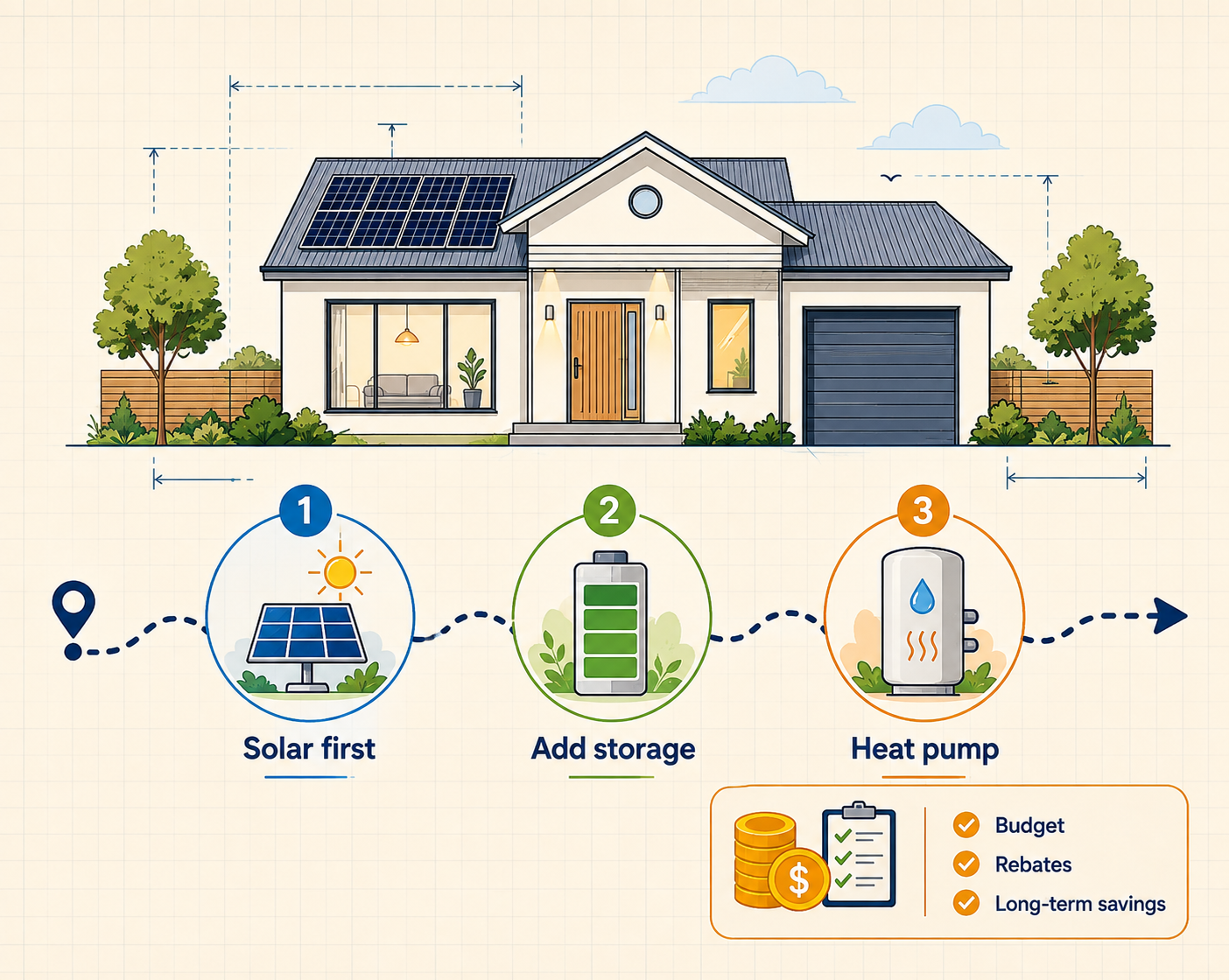
If budget means doing this in stages rather than all at once, here's how the three usually stack up against each other:
Solar tends to come first because it's the foundation the other two build on a solar panel system designed with future expansion in mind means adding a battery later is a straightforward job, not a redesign. But if your gas hot water system is on its last legs, waiting for the "ideal" order doesn't make sense — a heat pump hot water system can go in on its own timeline and still pair with solar whenever that happens.
How to Budget for a Staged Home Energy Upgrade
Trying to price a whole-home upgrade as a single number is where a lot of planning goes wrong. It's more useful to think in stages, with each one paid down and reassessed before the next.
A few things worth building into the budget from the start:
Ask for battery-ready wiring even if you're not buying a battery yet. The cost difference is small at installation time and expensive to retrofit later.
Get your switchboard checked before you commit to a heat pump or battery. Older homes sometimes need an upgrade first, and it's far better to know that during quoting than on installation day.
Treat rebates as reducing net cost, not as free money you spend elsewhere. Rebates lower what you owe upfront; they're not a separate pool of cash for a bigger system than you need.
Leave room for the unexpected. Roof repairs, tile replacements, or an unusually complex switchboard job can add to a quote a buffer of 10–15% avoids a mid-project scramble.
💡 Pro Tip
Plan your solar system for the home you want in two or three years not only the home you have today. Battery-ready wiring and a switchboard check now can prevent expensive upgrades later.
Which Victorian Rebates Can You Combine?
Victoria is unusually generous here, and the upgrades you're planning can draw on more than one rebate at the same time. On solar, that typically means the Solar Victoria rebate (up to $1,400), an optional interest-free loan (up to $1,400), and federal STCs (roughly 2,000–3,000 depending on system size). If you want the full breakdown of eligibility and how the paperwork works, our guide on how solar rebates work and who can claim them covers it in detail.
Heat pumps stack differently — Solar Victoria's hot water rebate, Victorian Energy Upgrades (VEU) certificates, and federal STCs can combine for 2,000–3,000+ off, with Reclaim Energy systems typically earning the most VEU certificates of any brand.
The part people miss: these schemes are applied per upgrade, not per household, so planning solar and heat pumps as separate stages (even close together) means claiming the full rebate on each, rather than assuming there's one combined cap.
Five Checks to Make Before You Request Quotes
A few practical checks before you request quotes save time later:
Pull your last 12 months of electricity bills. Installers size systems around usage, not guesswork, and seasonal variation matters.
Check your roof's age and condition. A roof needing replacement in the next few years is worth doing before solar goes on, not after.
Note your switchboard type. Older fuse-style boards often need upgrading before solar, battery, or heat pump installation can proceed.
Think about where a battery or heat pump unit would physically sit. Outdoor space, wall access, and proximity to your switchboard all affect installation complexity.
Costly Home Energy Upgrade Mistakes to Avoid
A few patterns show up again and again in upgrades that end up costing more or taking longer than expected:
Undersizing solar because a battery "might happen later." It's cheaper to size for where you're headed than to add capacity in a second install.
Assuming one rebate covers everything. Each upgrade has its own eligibility and paperwork — treat them as separate applications, not one bundle.
Booking installation before confirming switchboard capacity. This is the single most common cause of delayed or more expensive installs.
Waiting until a gas hot water system fails completely. An emergency replacement means less choice and no time to plan rebates or solar integration properly.
Choosing based on price alone. The cheapest quote often means non-Tier-1 equipment or a subcontracted install worth weighing against a 25-year warranty that actually gets honoured.
What Happens After You Accept a Quote?
Planning covers the decisions before you book the physical process is a separate stage with its own timeline, covering site assessment, grid approval, and installation day. If you're ready for that level of detail, our guide on planning a solar installation timeline for your home walks through what to expect week by week once you've committed to a system.
Plan Once, Upgrade With Confidence
The homeowners who end up happiest with their upgrade aren't necessarily the ones who moved fastest, they're the ones who planned with the next stage in mind, even if they were only paying for one stage today. Solar sized for a future battery, a switchboard checked before a heat pump goes in, rebates claimed properly at each step: none of it costs much extra to think through upfront, and all of it gets expensive to fix afterwards.
Ready to plan your own upgrade properly, whether that's one step or all three? Check your eligibility with our free calculator, get a personalized quote, or talk it through with our Melbourne-based team before you commit to anything.