Thinking about installing a 6.6kW solar system but not sure what to expect? This guide walks you through every stage of the installation process, from the initial site assessment and system design to government rebate approvals, panel installation, testing, and final grid connection. You'll also learn how a 6.6kW system works, how much money it can save on electricity bills, the factors that affect its performance in Australia, available government incentives, and practical tips for choosing the right installer and equipment. Whether you're planning solar for your home or a small business, this guide will help you understand the process and make a confident, informed decision.
Table of Contents
- 1.What is Solar Energy and How Does it Work?
- 2.The Step-by-Step 6.6kW Solar System Installation Process
- 3.1. Site Assessment and Consumption Analysis
- 4.2. Engineering and System Design
- 5.3. Approval and Rebate Processing
- 6.4. Physical Installation Day
- 7.5. Testing and Commissioning
- 8.6. Meter Upgrade and Grid Connection
- 9.Cost Savings and Electricity Bill Reduction
- 10.Factors Affecting Solar Efficiency in Australia
- 11.Government Rebates and Incentives in Australia
- 12.Residential vs Commercial Solar Use
- 13.Residential Installation
- 14.Commercial Installation
- 15.Practical Tips for Choosing Solar Systems
- 16.Frequently Asked Questions
- 17.How much can solar panels save in Australia?
- 18.Are solar panels worth it in Australia?
- 19.What rebates are available for solar systems?
- 20.Why is 6.6kW the standard size?
- 21.How long does the installation take?
- 22.Conclusion
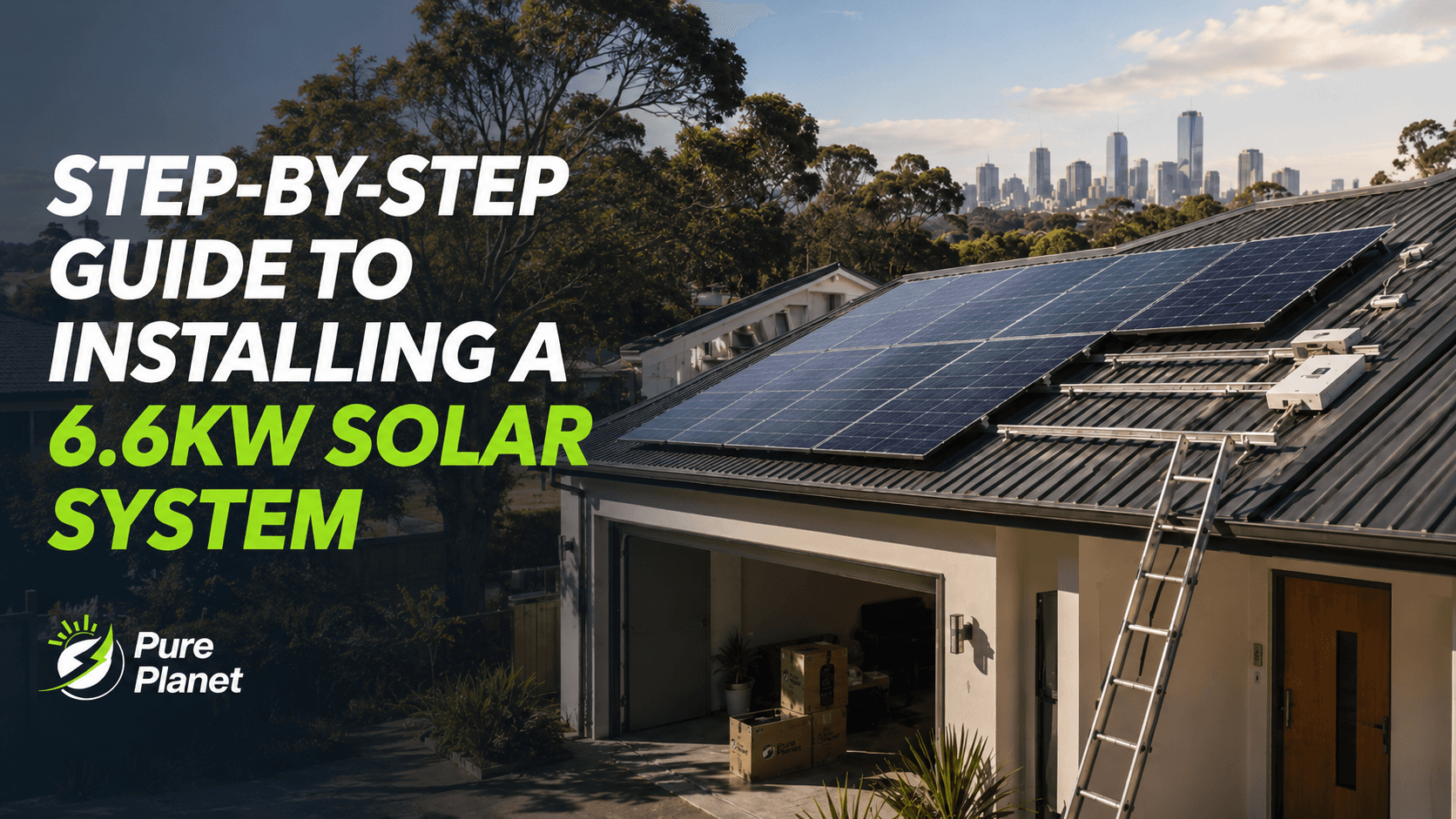
A 6.6kW solar system installation typically involves a six-step process: site assessment, system design, government rebate approval, physical mounting of panels, inverter setup, and grid connection.
In Australian households, solar systems typically feature 15 to 18 high-efficiency panels paired with a 5kW inverter. This specific configuration is the most popular choice because it maximizes federal incentives while providing ample power to significantly reduce annual electricity bills.
A properly installed solar system can provide a seamless transition to clean energy, often paying for itself within 3 to 5 years. Most homeowners notice reduced electricity bills immediately after the system is commissioned. By following a structured installation path, you ensure that your investment meets Australian safety standards and qualifies for all available financial rewards.
What is Solar Energy and How Does it Work?
Solar energy is a renewable energy source that converts sunlight into electricity using solar panels, helping households and businesses reduce reliance on grid power. The process begins when sunlight strikes the photovoltaic (PV) cells within the solar panels. This creates Direct Current (DC) electricity, which is the foundational power generated by your roof.
Because Australian homes operate on Alternating Current (AC), the system requires inverter systems to transform the energy. The inverter acts as the brain of the installation, directing electricity to your appliances, your solar battery storage, or back to the utility provider through a grid connection. High-quality components are essential to ensure this conversion happens with minimal energy loss.
The Step-by-Step 6.6kW Solar System Installation Process
Navigating the installation of a 6.6kW array requires coordination between the homeowner and an accredited installer. Planning ahead helps avoid administrative delays with local energy distributors.
1. Site Assessment and Consumption Analysis
Every successful project starts with a detailed look at your roof and your power bills. Installers check for shading from nearby trees and ensure your switchboard is up to modern standards. You can browse our solar panel options to see which hardware suits your roof's specific orientation.
2. Engineering and System Design
Once the site is assessed, a custom rail and panel layout is created. For a 6.6kW solar system installation, this usually involves grouping panels on North, West, or East-facing roof planes to capture the most sunlight throughout the day.
3. Approval and Rebate Processing
Before the first bolt is tightened, applications are sent to your energy distributor. This phase also involves securing solar rebates and incentives through the federal STC scheme. Most reputable installers handle this paperwork on your behalf to ensure the discount is applied to your final quote.
4. Physical Installation Day
On the day of the build, the team installs the roof brackets and rails. The solar panels Australia homeowners trust are then secured to the racking. Wiring is run from the roof to the inverter, which is typically mounted in a shaded area near your switchboard.
5. Testing and Commissioning
After the wiring is complete, the system is tested for safety and performance. The installer ensures the inverter is communicating correctly with your home’s Wi-Fi so you can track your energy production via a smartphone app.
6. Meter Upgrade and Grid Connection
The final step involves your energy retailer. They will either remotely reconfigure your smart meter or send a technician to install a new one. This allows you to legally export excess power and receive credits on your bill.
Cost Savings and Electricity Bill Reduction
The primary driver for a 6.6kW solar system installation is the massive solar energy savings it offers. By generating your own electricity, you avoid the high retail rates charged by energy companies, which have risen significantly across Australia recently.
Most homeowners notice reduced electricity bills when they shift their heavy energy consumption tasks—like running the dishwasher or clothes dryer—to the middle of the day. A 6.6kW system is large enough to cover the daytime needs of a standard four-person family while still leaving enough surplus to earn feed-in credits. For a detailed breakdown of how these systems perform over time, you can visit our comprehensive solar blog.
Factors Affecting Solar Efficiency in Australia
Several variables can influence how much power your new 6.6kW array actually produces once it is on your roof.
Roof Orientation: North-facing panels yield the most energy, but West-facing panels are excellent for covering afternoon air conditioning loads.
Ambient Temperature: Solar panels are actually more efficient in cooler weather. High Australian heat can cause a slight drop in production, which is why choosing panels with a low temperature coefficient is important.
Dirt and Soiling: Dust, salt spray, and bird droppings can block sunlight. Occasional cleaning ensures your renewable energy Australia investment continues to work at peak capacity.
Government Rebates and Incentives in Australia
The Australian government provides substantial support to make solar more affordable. The federal Small-scale Technology Certificate (STC) scheme is the most significant incentive, often reducing the cost of a 6.6kW system by roughly 30%.
In 2026, many states continue to offer additional support. Some regions provide interest-free loans for solar battery storage, while others offer specific rebates for rental properties or low-income households. These incentives are designed to accelerate the nation’s transition to a low-carbon grid and help families manage the cost of living.
Residential vs Commercial Solar Use
While the 6.6kW size is the "sweet spot" for residential homes, the logic for larger systems is quite similar.
Residential Installation
For a home, the focus is on self-sufficiency and reducing the quarterly power bill. The 6.6kW array is perfectly balanced to provide enough power without requiring a massive, expensive inverter.
Commercial Installation
Businesses often require much larger systems, such as 30kW or 100kW, because their energy consumption is significantly higher during the day. However, for a small home office or a boutique retail shop, a 6.6kW solar system installation can still be a highly effective way to lower overheads. You can explore our full range of solar services to see how we scale these solutions for different property types.
Practical Tips for Choosing Solar Systems
To ensure your installation is a long-term success, focus on quality and accreditation rather than just the lowest price.
Select a CEC Accredited Installer: This ensures the person on your roof is trained in the latest safety and technical standards.
Choose Tier-1 Panels: These panels are made by manufacturers with strong financial backing and long-term warranties.
Future-Proof with a Hybrid Inverter: If you think you might want a battery in a year or two, installing a hybrid inverter now will save you thousands of dollars in the future.
Frequently Asked Questions
How much can solar panels save in Australia?
A well-maintained 6.6kW solar system can save an Australian household between $1,400 and $2,200 per year. These savings depend on your local electricity rates and how much of your generated power you use yourself.
Are solar panels worth it in Australia?
Yes, absolutely. Australia has some of the best solar resources in the world. With a payback period of under five years in many cases, solar is one of the most profitable home improvements you can make.
What rebates are available for solar systems?
The primary incentive is the federal STC scheme. Some states also offer additional rebates, interest-free loans, or specific grants for batteries and virtual power plant (VPP) participation.
Why is 6.6kW the standard size?
It is the standard because most local grids allow for a 5kW inverter export limit. Installing 6.6kW of panels on a 5kW inverter (a 133% oversizing) is the most efficient way to maximize energy production and government rebates.
How long does the installation take?
The physical 6.6kW solar system installation on your roof usually takes one day. However, the entire process from first quote to final grid connection typically takes 4 to 8 weeks due to administrative approvals.
Conclusion
A 6.6kW solar system installation is a strategic move for any Australian homeowner looking to gain energy independence. By following a professional installation guide and choosing high-quality components, you turn your roof into a high-yielding financial asset. The combination of strong sunshine, high electricity prices, and generous rebates makes 2026 the perfect time to make the switch to renewable power.
Understanding how solar energy works and the savings it offers can help you make a more informed decision when considering a solar system for your property.