Learn how to sell excess solar energy back to the grid in Melbourne. Discover feed-in tariffs, smart meter requirements, and tips for maximizing your credits.
Table of Contents
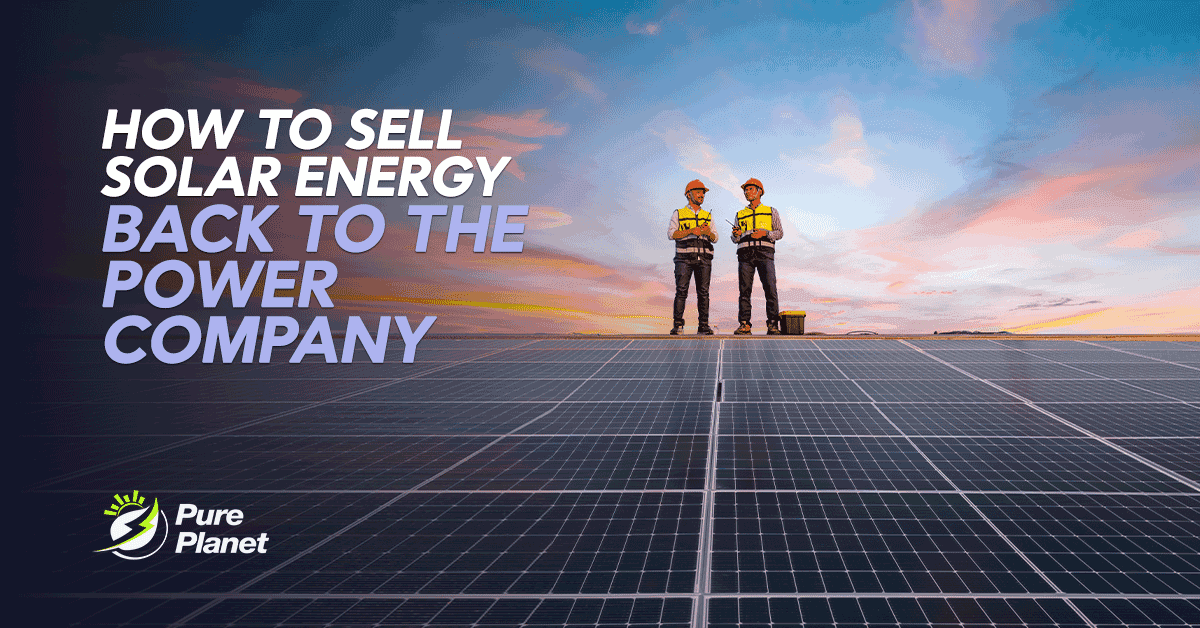
For most Melbourne homeowners, a solar system is more than just a tool for lowering bills; it is a mini-power station capable of generating a surplus. When your panels produce more electricity than your home can consume, that extra energy doesn't just vanish. Instead, it flows back into the main electricity grid to be used by your neighbours. In exchange for this contribution, your energy retailer provides you with a financial credit on your bill.
At Pure Planet, we design systems that maximise your export potential while ensuring your home remains the primary beneficiary of the energy produced. Understanding the administrative and technical steps required to sell power back to the grid is essential for getting the most value out of your solar investment.
Understanding the Solar Feed-in Tariff (FiT)
The "sale price" of the electricity you send back to the grid is known as a feed-in tariff. This is a rate per kilowatt-hour (kWh) that your energy provider credits to your account. In Victoria, the Essential Services Commission historically set a minimum rate, but as of 2026, the market has shifted towards a deregulated model. This means retailers can set their own competitive rates, which can vary significantly between providers.
Currently, many retailers offer "time-varying" tariffs. These plans pay you more for energy exported during late afternoon or evening "peak" periods when the grid needs it most, and less during the middle of the day when solar supply is abundant. Selecting the right retailer plan is just as important as the installation itself, as a higher feed-in tariff can significantly shorten your system's payback period.
The Role of the Smart Meter
To sell energy back to the power company, your home must be equipped with a smart meter (also known as a digital or interval meter). Unlike old analog meters that only track total consumption, a smart meter can record electricity flow in two directions. It precisely measures how much energy you are drawing from the grid and exactly how much surplus solar power you are exporting at any given moment.
In Melbourne, smart meters are standard for new solar installations. Once your system is installed and inspected by a Licensed Electrical Inspector, your solar battery or inverter setup will be officially "commissioned." Your energy retailer will then remotely reconfigure your meter to track your exports. This ensures that every watt you send back is accurately accounted for on your next quarterly statement.
Navigating Export Limits and Grid Approvals
Before you can start selling energy, your local Distribution Network Service Provider (such as Powercor, United Energy, or CitiPower) must approve your connection. These companies manage the poles and wires and must ensure that the local network can handle the extra power your system will provide. In some parts of Melbourne, "export limits" may be applied to your system to protect grid stability.
A typical residential export limit in Victoria is 5kW per phase. If your system is larger than this, your inverter will be programmed to "throttle" the export once it hits that limit, even if you are producing more. Understanding these limits during the design phase is crucial. By adding a battery, you can capture that "overflow" energy instead of losing it to a limit, allowing you to use it later or export it during more valuable evening windows.
Conclusion
Selling solar energy back to the power company is a seamless process once the right infrastructure and retail plan are in place. By transforming your roof into a source of revenue, you not only reduce your own costs but also contribute to a greener, more resilient Melbourne power grid. While feed-in tariffs have evolved to reflect market conditions, they remain a valuable "bonus" for any modern solar household.
At Pure Planet, we handle the complex grid applications and retailer coordination so you can focus on the savings. We help you choose the best technology and the right export strategies to ensure you are getting every cent you deserve from the energy you produce. Contact us today to learn how we can help you turn your home into a profitable renewable energy hub.