Commercial solar systems help businesses slash operational costs by directly offsetting expensive daytime grid electricity with free, self-generated solar power. By lowering fixed overheads, mitigating peak demand charges, and leveraging government incentives like instant asset write-offs, companies can rapidly improve their bottom line while locking in long-term energy price stability.
Table of Contents
- 1.Understanding Solar Energy and How It Works
- 2.Cost Savings and Electricity Bill Reduction
- 3.Reducing Peak Demand Charges
- 4.Tax Benefits and Asset Depreciation
- 5.Factors Affecting Commercial Solar Efficiency
- 6.Government Rebates and Incentives in Australia
- 7.STCs and LGCs
- 8.State-Specific Grants
- 9.Residential vs Commercial Solar Use
- 10.Residential Savings
- 11.Commercial Savings
- 12.Practical Tips for Choosing Commercial Solar Systems
- 13.Frequently Asked Questions
- 14.How much can solar panels save in Australia for a business?
- 15.Are commercial solar systems worth it in Australia?
- 16.What rebates are available for commercial solar?
- 17.How long do commercial solar panels last?
- 18.Will solar work during a power outage?
- 19.Conclusion
Commercial solar systems save businesses money by drastically reducing daytime electricity purchases and lowering peak demand charges. Because most businesses operate during daylight hours, they can consume the solar energy they generate in real-time, effectively bypassing high retail electricity tariffs.
In 2026, a properly installed commercial system typically offers a payback period of 3 to 5 years, providing decades of near-zero energy costs and immediate protection against volatile market prices. For many Australian organisations, energy is one of the top three operational expenses. By switching to renewable energy, businesses can lock in a predictable electricity rate for the next 25 years.
Most commercial property owners notice reduced electricity bills immediately after activation, with many seeing a 60% to 80% drop in their monthly energy spend.
Understanding Solar Energy and How It Works
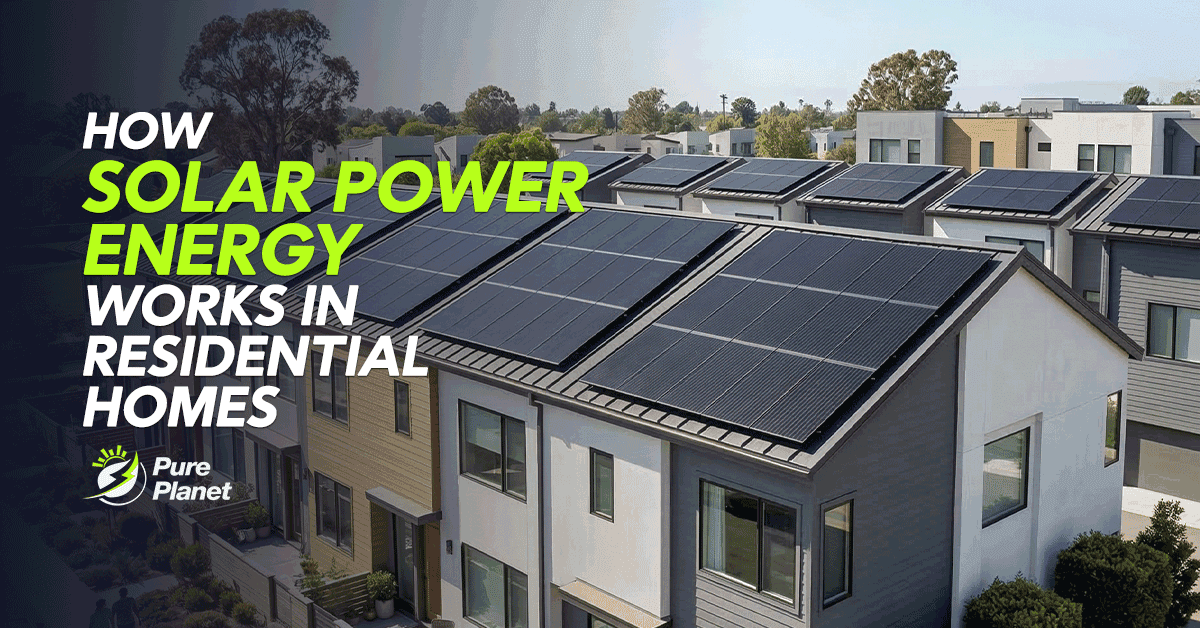
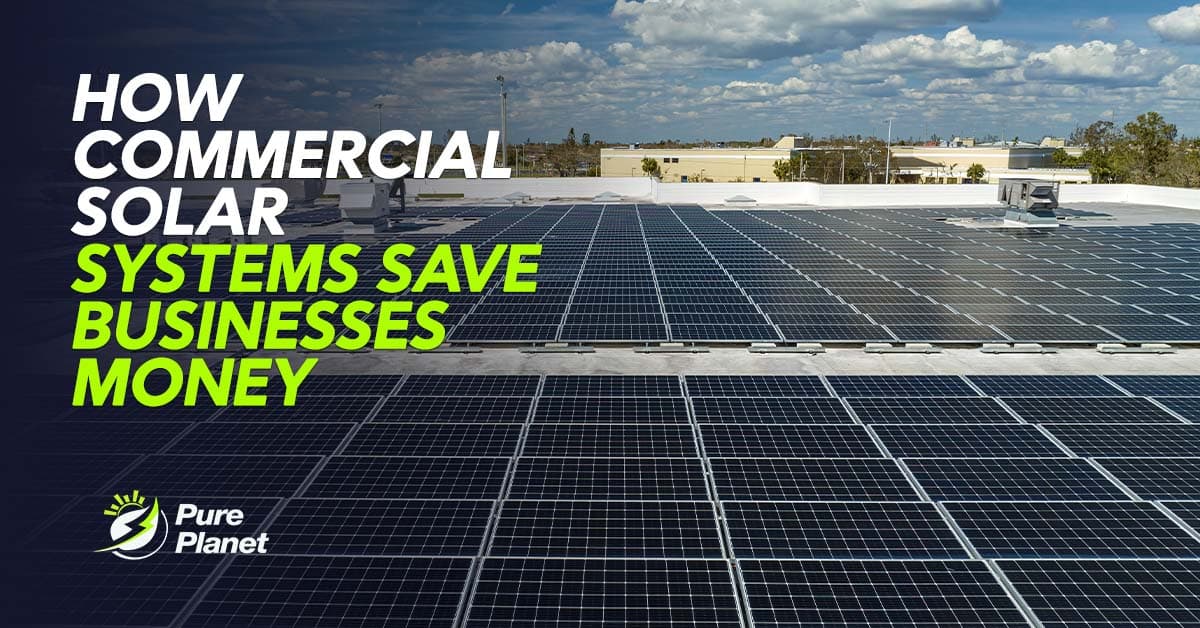
Solar energy is a renewable power source that converts sunlight into electricity through photovoltaic (PV) cells. In a commercial setting, hundreds of solar panels are typically mounted on large factory or office roofs to capture maximum sunlight.
This energy starts as Direct Current (DC) and is managed by large-scale inverter systems that convert it into Alternating Current (AC) to power machinery, lighting, and HVAC systems. The intelligence of modern commercial solar systems lies in their ability to integrate with the local grid connection.
When your panels produce more power than the building requires, that excess is either stored or exported. For businesses with high night-time use, adding solar battery storage ensures that the free energy captured during the day isn't wasted but used to offset expensive evening rates.
Cost Savings and Electricity Bill Reduction
The financial impact of solar on a business goes beyond simple bill reduction. It changes the fundamental cost structure of the company. In Australia, commercial energy bills often include "demand charges," which are fees based on the highest amount of power drawn at any single time.
Reducing Peak Demand Charges
By using solar power to meet the heaviest loads during the day—such as running cold storage or manufacturing lines—businesses can lower their peak demand profile. This results in significant long-term savings on network charges that standard residential users don't typically see.
Tax Benefits and Asset Depreciation
Investing in commercial solar systems often allows for significant tax advantages. Under current Australian tax laws, many businesses can utilize instant asset write-off schemes or accelerated depreciation for renewable energy equipment. This reduces the net cost of the system from day one, improving the overall return on investment.
You can view our solar services to see how we design systems that maximize these specific financial outcomes.

Factors Affecting Commercial Solar Efficiency
For a commercial system to reach its full savings potential, several technical and environmental factors must be optimized. Efficiency in a large-scale array is about consistency and reliability across thousands of individual solar cells.
Roof Orientation and Pitch: While North-facing is ideal, large East-West arrays are common in commercial settings to provide a "flatter" and longer production curve that matches a 9-to-5 workday.
Inverter Redundancy: Using multiple high-quality inverters ensures that if one unit requires maintenance, the rest of the system continues to generate power for the business.
Regular Monitoring: Commercial systems generate massive amounts of data. Using smart monitoring allows facility managers to identify and fix performance drops before they impact the bottom line.
To ensure your business gets the most out of the Australian climate, it is vital to work with a team that understands industrial-scale requirements. You can learn more about our team and our experience in engineering high-yield commercial arrays.
Government Rebates and Incentives in Australia
The Australian government supports the transition to renewable energy Australia wide through several powerful incentive programs. These are designed to lower the barrier to entry for small and large enterprises alike.
STCs and LGCs
Small-scale Technology Certificates (STCs) provide an upfront discount for systems up to 100kW. For larger installations, Large-scale Generation Certificates (LGCs) provide ongoing revenue based on the amount of clean energy the system produces annually.
State-Specific Grants
In 2026, several Australian states offer specific grants for manufacturing and agricultural businesses to adopt commercial solar systems. These incentives often cover a portion of the installation cost or provide low-interest financing to ensure the project is cash-flow positive from the first month.
💡 Pro Tip
Don’t just size your commercial solar array based on your total annual kilowatt-hour consumption. Work with your installation team to conduct a detailed interval data analysis that aligns your peak manufacturing or HVAC operating hours with daylight generation. Sizing your system to achieve a high "interval match" ensures you maximize behind-the-meter consumption, achieve an optimal return on investment, and compress your system's payback period to under three years.
Residential vs Commercial Solar Use
While the technology is similar, the scale and intent of these systems differ significantly.
Residential Savings
Homeowners focus on offsetting evening energy use and achieving a "net-zero" bill. Their systems are smaller and often prioritize aesthetic integration with the home's architecture.
Commercial Savings
Businesses prioritize the "Levelised Cost of Energy" (LCOE). They need systems that can withstand harsh industrial environments and provide a guaranteed output to satisfy stakeholders. For a business, solar panels Australia wide are viewed as a high-yield financial asset rather than just a household utility.
Practical Tips for Choosing Commercial Solar Systems
Choosing the right partner is critical for a project of this scale. A poorly designed commercial system can lead to maintenance headaches and underperformance.
Demand Profile Analysis: Ensure your provider performs a detailed interval data analysis. The system should be sized to your actual energy usage, not just your roof space.
Quality of Components: In an industrial environment, cheap components fail quickly. Insist on Tier-1 panels and industrial-grade inverters with long-term local support.
Future-Proofing for Storage: Even if you don't install a battery today, ensure the system is "battery-ready" so you can integrate solar battery storage as energy prices and technology evolve.
Reviewing our recent solar projects can help you understand the standard of quality required to protect a commercial investment for 25 years.
Conclusion
The transition to commercial solar systems represents a strategic financial move for Australian businesses. By converting underutilized roof space into a power plant, organisations can significantly lower overheads, improve their sustainability credentials, and gain a competitive edge in an increasingly expensive energy market.
Whether you are a small workshop or a large manufacturing facility, the combination of high sunlight, mature technology, and strong incentives makes 2026 the ideal time to invest in renewable energy. Understanding how solar energy works and the savings it offers can help you make a more informed decision when considering a solar system for your property.