Victoria's Solar Homes Program still offers a rebate of up to $1,400 plus an optional interest-free loan, but the eligibility rules shifted mid-2026 and caught a lot of homeowners off guard. This guide covers exactly who qualifies now, what the rebate is genuinely worth, and how to apply before your circumstances or the program itself changes again.
Table of Contents
If your household earns more than $150,000 a year combined, you no longer qualify for Victoria's solar rebate. That threshold used to sit at $210,000, and it dropped on 1 July 2026, which means a fair number of Melbourne households who would have qualified last year no longer do this year.
That's the kind of detail that gets buried in fine print, but it changes who this rebate is actually for. Here's what the Solar Homes Program looks like right now, who still qualifies, and what it's genuinely worth once you add up the numbers.
What Changed With the Solar Homes Program This Year?
Two changes matter if you're applying now rather than last year:
- The household income cap dropped from $210,000 to $150,000 (combined taxable income of all property owners), effective for any application submitted after 30 June 2026
- From 1 May 2026, if you want the interest-free loan alongside your rebate, you have to select it at the time you apply, not add it on later
Neither change affects the rebate amount itself, which is still up to $1,400. They change who gets through the door in the first place.
Do You Actually Qualify for the Rebate?
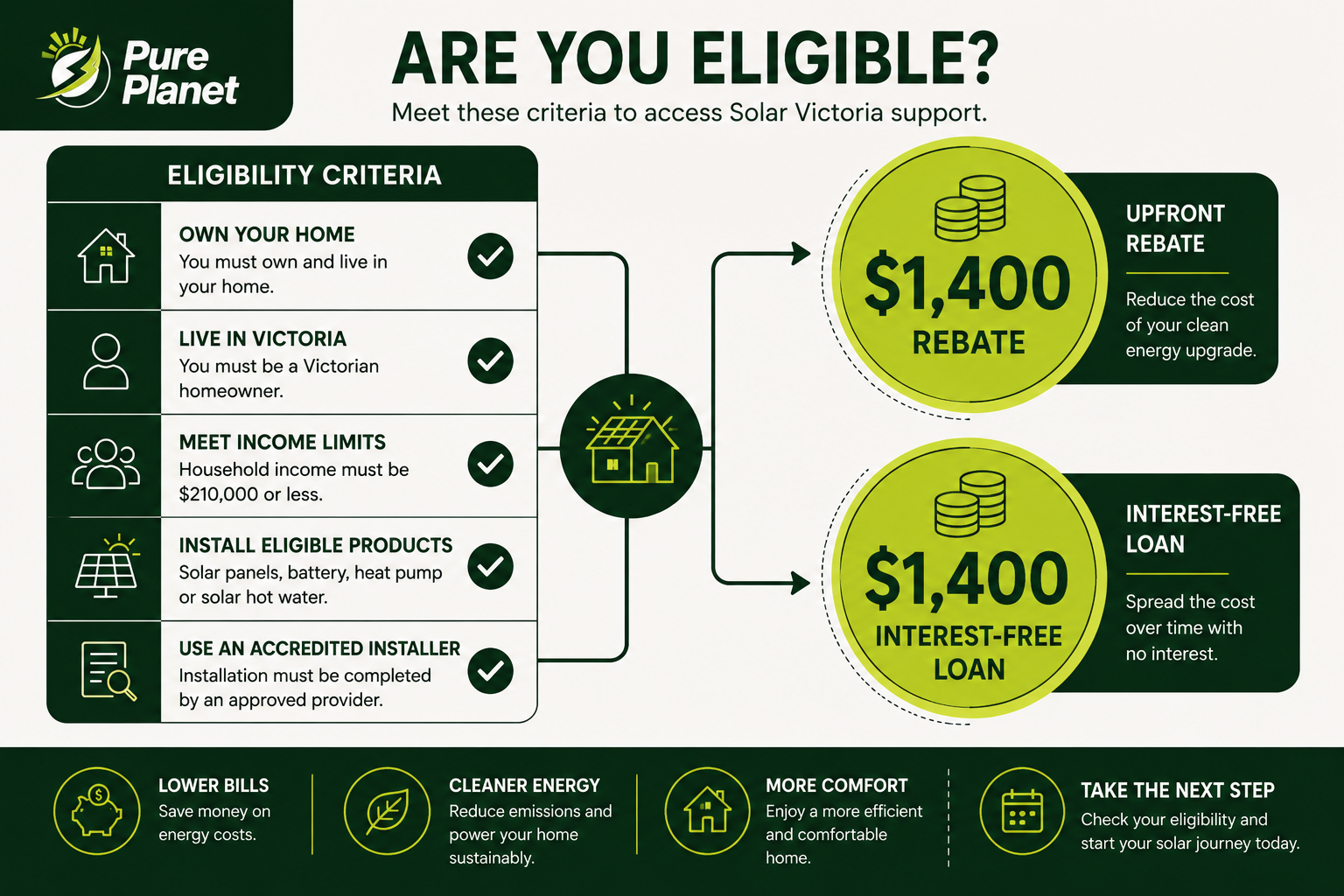
To be eligible for the Victorian solar panel rebate, you need to meet all of the following:
- You're the owner-occupier of the property (or building a home you'll live in)
- Combined household taxable income across all owners is under $150,000 a year
- The property is valued under $3 million
- The address hasn't already received a solar panel or battery rebate under this program
- There's been no solar PV system installed at the property in the last 10 years, unless you're replacing an older, eligible system
If you've received a rebate at a previous address and have since moved, you can apply again at your new home, provided it's your primary residence and hasn't claimed one before. Renters and rental property owners have a separate, similar pathway.
Pure Planet works only with authorised solar retailer status and eligible product lists, and handles the entire application on your behalf, so you're not the one chasing paperwork or checking product eligibility yourself.
How Much Is the Rebate Really Worth?
The rebate covers up to 50% of your system's purchase cost, capped at $1,400, calculated after any other discounts (including the federal Small-scale Technology Certificate discount) have already been applied. On top of that, you can opt into an interest-free loan for the same amount, up to $1,400, repaid over four years at roughly $29.17 a month, with repayments starting 30 days after your installation is approved.
Beyond the upfront saving, the program's own figures show typical solar households saving up to $500 a year on their bills, rising to around $1,000 a year for households that make a point of using more of their solar power during the day rather than exporting it. Here's how that tends to break down against the system sizes Pure Planet installs most often:
Actual savings depend on your usage pattern and system size, so treat this as a guide rather than a guarantee.
What About Batteries and Hot Water?
Solar Victoria has stopped accepting new applications for its interest-free battery loan, so it's no longer part of the state incentive picture. The current battery incentive that matters is the federal Cheaper Home Batteries Program, which discounts eligible home battery systems by roughly 30% upfront, applied by your installer rather than claimed separately.
Hot water is still very much part of the Solar Homes Program. Eligible heat pump systems attract a rebate of up to $1,000, or up to $1,400 for a locally made product, and this can stack with Victorian Energy Upgrades credits on top. Our guide on how solar rebates work and who can claim them goes deeper into how the heat pump and VEU side of this stacks together.
💡 Pro Tip
Don't wait for a "good deal" before applying. The rebate amount is fixed at up to $1,400 regardless of which retailer you use, so the only variable worth shopping around on is the underlying system price and equipment quality, not the rebate itself.
How Do You Actually Apply Without Missing Out?
The process runs in a fairly fixed order: get a quote from an authorised retailer, wait for pre-approval to connect to the grid, submit your proof of eligibility, then wait for Solar Victoria to send a QR code confirming you're approved. Your installer scans that code on the day of installation, which needs to happen within 120 days of approval.
One detail that trips people up: if your system goes in before your eligibility is confirmed, you don't get the rebate at all. We've written a full walkthrough of this in how to get approved for solar rebates quickly.
Is 2026 Still the Right Year to Apply?
If your household income sits under the new $150,000 cap, yes. The rebate value hasn't shrunk. What's shrunk is the pool of households who qualify, which is why it's worth checking your eligibility now rather than assuming last year's rules still apply.
Conclusion
The Victorian solar rebate hasn't lost any value in 2026, but it has gotten more selective about who qualifies. If you're under the new income threshold and haven't claimed at your address before, there's still a genuine $1,400 rebate and matching interest-free loan on the table. The households missing out this year aren't the ones the rebate got smaller for. They're the ones who assumed the old rules still applied.
Check your eligibility with our solar rebate calculator, or get a free quote and we'll confirm exactly what you qualify for.