Comparing solar panel brands and efficiency ratings helps homeowners cut through corporate jargon to find the highest-performing system for their property. By evaluating real-world factors like temperature coefficients, degradation rates, and tier-1 manufacturing standards, this comparison ensures you invest in hardware that maximizes your long-term energy savings.
Table of Contents
- 1.Explanation of Solar Energy and How It Works
- 2.Top Solar Panel Brands and Efficiency Comparison (2026)
- 3.Premium Efficiency Leaders
- 4.Best-Value Tier-1 Brands
- 5.Cost Savings and Electricity Bill Reduction
- 6.Factors Affecting Solar Efficiency in Australia
- 7.Government Rebates and Incentives in Australia
- 8.Residential vs Commercial Solar Use
- 9.Residential Choice
- 10.Commercial Choice
- 11.Practical Tips for Choosing Solar Systems
- 12.Frequently Asked Questions
- 13.How much can solar panels save in Australia?
- 14.Are solar panels worth it in Australia?
- 15.What rebates are available for solar systems?
- 16.What is the difference between N-type and P-type panels?
- 17.Which solar panel brand is best for the coast?
- 18.Conclusion
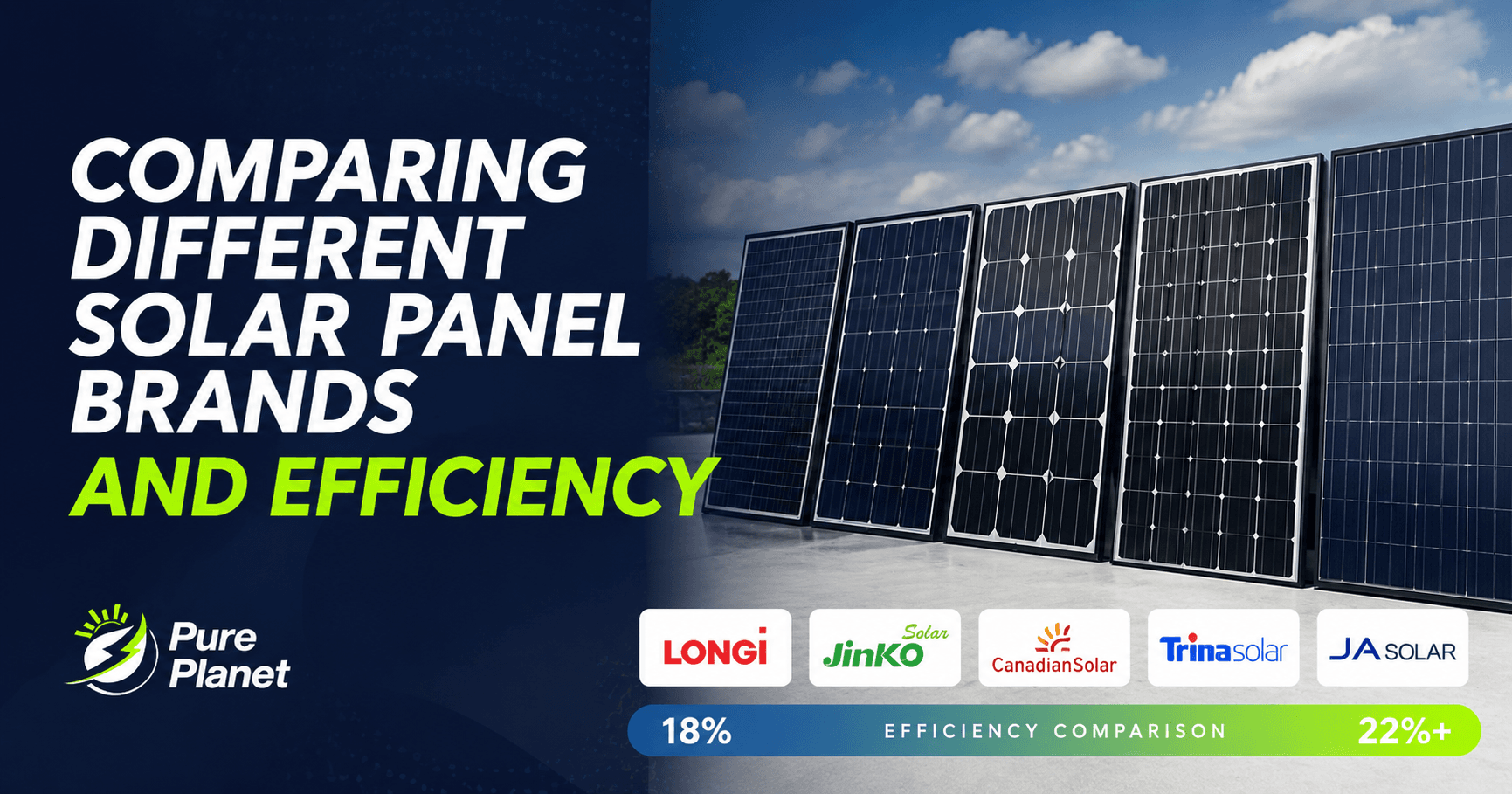
Choosing between the top solar panel brands in Australia involves comparing energy conversion rates, warranty terms, and long-term reliability. In 2026, premium brands like Aiko and Maxeon lead the market with efficiencies reaching up to 25.2%, while Tier-1 manufacturers like Jinko Solar and LONGi offer excellent value with N-type TOPCon technology. Selecting a highly efficient brand ensures you generate more power from your roof space, significantly accelerating your return on investment.
In Australian households, solar systems typically feature Tier-1 monocrystalline panels because they handle the local heat more effectively than older technologies. A properly installed solar system can provide reliable power for over 25 years, provided you choose a brand with a strong local presence to support its warranty.
Most homeowners notice reduced electricity bills when they prioritize brands that offer low annual degradation rates, keeping energy production high for the life of the system.
Explanation of Solar Energy and How It Works
Solar energy is a renewable resource that converts photons from sunlight into electricity through photovoltaic (PV) cells. When sunlight hits your solar panels, it creates a flow of direct current (DC) electricity. However, since Australian homes run on alternating current (AC), the system requires inverter systems to transform that energy into a usable form for your appliances.
The efficiency of a brand refers to how much of that captured sunlight actually becomes electricity. As of 2026, the industry has shifted away from older P-type PERC cells toward superior N-type technologies. These modern panels are not only more efficient but also perform better in low-light conditions, ensuring your home stays powered even on overcast days.
Top Solar Panel Brands and Efficiency Comparison (2026)
The Australian market is currently divided into premium high-efficiency brands and high-volume Tier-1 brands. Both categories offer excellent renewable energy Australia solutions depending on your budget and roof space.
Premium Efficiency Leaders
If you have limited roof space, choosing a brand with the highest possible solar panel efficiency is vital.
Aiko Solar: Currently holds the top spot with its Neostar series, reaching up to 25.2% efficiency using All Back Contact (ABC) technology.
Maxeon (SunPower): Renowned for durability and an industry-leading 40-year warranty, with efficiencies around 24.1%.
REC Solar: A favorite for Australian conditions, their Alpha Pure series offers roughly 22.3% efficiency and excellent heat tolerance.
Best-Value Tier-1 Brands
These brands are produced by the world’s largest manufacturers and offer a perfect balance of performance and price.
Jinko Solar: The Tiger Neo series is a market leader in Australia, utilizing N-type TOPCon cells with efficiencies up to 24%.
LONGi Solar: Their Hi-MO series consistently ranks as a top performer for reliability and long-term solar energy savings.
Trina Solar: The Vertex S+ range is highly regarded for its dual-glass construction, which provides extra protection against the harsh Australian sun.
Cost Savings and Electricity Bill Reduction
The ultimate goal of comparing solar panel brands is to maximize your financial gain. A more efficient panel doesn't just make more power; it makes that power more reliably over several decades. By reducing your reliance on the grid, you protect your household from rising energy tariffs.
Most Australian families find that a high-quality system pays for itself within 3 to 5 years. By generating your own power during the day, you avoid buying electricity when prices are highest. If you combine your panels with solar battery storage, you can extend these savings into the night, potentially reducing your grid reliance by over 80%. You can view our solar services to see how we tailor brand selection to your specific savings goals.

Factors Affecting Solar Efficiency in Australia
Even the best solar panel brands can underperform if environmental factors are not managed. Australia’s climate presents unique challenges that can affect total output.
Temperature Coefficient: High heat can reduce a panel's output. Brands like REC and Maxeon have superior temperature coefficients, meaning they lose less power on 40°C days.
Salt Mist Corrosion: If you live near the coast, you must choose a brand certified for salt mist resistance to prevent the frame and cells from degrading prematurely.
LID and LeTID: Modern N-type panels are virtually immune to Light-Induced Degradation, ensuring your solar energy production doesn't drop significantly in the first year of operation.
To ensure your chosen brand is installed for maximum efficiency, you can learn more about our team and our experience with local climate requirements.
Government Rebates and Incentives in Australia
The cost of premium solar panel brands is significantly reduced by federal and state solar rebates and incentives. The Small-scale Technology Certificate (STC) scheme remains the primary driver for affordability in 2026.
The rebate is calculated based on how much renewable energy your system is expected to produce. Because higher efficiency panels generate more power, they often help you secure the maximum possible rebate for your system size. Additionally, some states offer interest-free loans specifically for "high-performance" systems, making it easier to invest in top-tier brands without a large upfront payment.
Residential vs Commercial Solar Use
The choice of brand often changes depending on whether the panels are for a home or a business.
Residential Choice
Homeowners usually prioritize aesthetics (all-black panels) and long warranties. Since residential roofs have limited space, high-efficiency brands like Aiko or REC are often preferred to maximize the 6.6kW or 10kW system capacity.
Commercial Choice
Businesses often have large, flat roofs where space is not an issue. In these cases, Tier-1 brands like Jinko or Canadian Solar are often the primary choice. The focus for commercial projects is the "Levelised Cost of Energy" (LCOE)—getting the most power for the lowest possible investment over 20 years.
💡 Pro Tip
Don't get hyper-focused purely on the headline panel efficiency percentage (e.g., 22% vs 23%). For homes across Victoria, a panel’s temperature coefficient is often just as critical. Look for premium Tier-1 brands with a low temperature coefficient (ideally below -0.35%/°C), which ensures your solar array continues to deliver maximum power output even during peak Australian summer heatwaves when standard panels suffer severe efficiency drops.
Practical Tips for Choosing Solar Systems
When evaluating different quotes, keep these practical points in mind to ensure you are getting a genuine Tier-1 product.
Check the CEC Approval: Ensure the specific model is currently on the Clean Energy Council’s approved list for Australia.
Verify the Warranty Support: A 25-year warranty is only useful if the brand has an Australian office. Avoid brands that require you to contact a headquarters overseas for claims.
Match the Inverter: A premium panel brand should be paired with a high-quality inverter. You can consult our solar experts to find the perfect match for your home.
Conclusion
Choosing the right solar panel brand in 2026 is about balancing cutting-edge efficiency with long-term reliability. Whether you opt for the record-breaking efficiency of Aiko or the trusted value of Jinko Solar, the key is to select a brand that fits your roof's constraints and your family's energy habits. By investing in a high-quality system today, you lock in decades of energy independence and significant financial savings.
Understanding how solar energy works and the savings it offers can help you make a more informed decision when considering a solar system for your property.